The short answer: replace blades and shaver heads on a schedule, replace a brush when it keeps shedding after a proper clean, replace a razor body when its threads or its plating give up, and replace a bowl, comb or strop only when it is damaged beyond reconditioning. The symptom tells you which of those you are dealing with, and usually it is one part rather than the whole kit.
Who this is for: anyone whose shave has quietly gone from comfortable to rough, or whose trimmer has started pulling, and who is trying to work out what changed. Who should skip it: anyone who wants a shopping list rather than a diagnosis. Our shaving kit picks are the better start if you are buying your first set of tools.
Three kinds of wear, and why the difference matters
Everything in a kit falls into one of three groups, and the group decides what you actually spend money on.
- Consumables are built to be thrown away: razor blades, shaver heads, trimmer blades. You replace these on a cadence, and the only real question is whether you are replacing them often enough.
- Wear parts on a tool you keep are things like a brush knot, a strop, or the blade set on a pair of clippers. The tool is sound; one component is finished.
- Bodies are the razor, the bowl, the comb, the scissors. These are meant to outlast the consumables, and when one fails it is almost always damage or corrosion rather than honest wear.
Nearly every wasted purchase comes from confusing two of these. Treat a consumable as a body and you shave with a blunt blade for a month. Treat a body as a consumable and you throw away a good razor because its blade went dull.
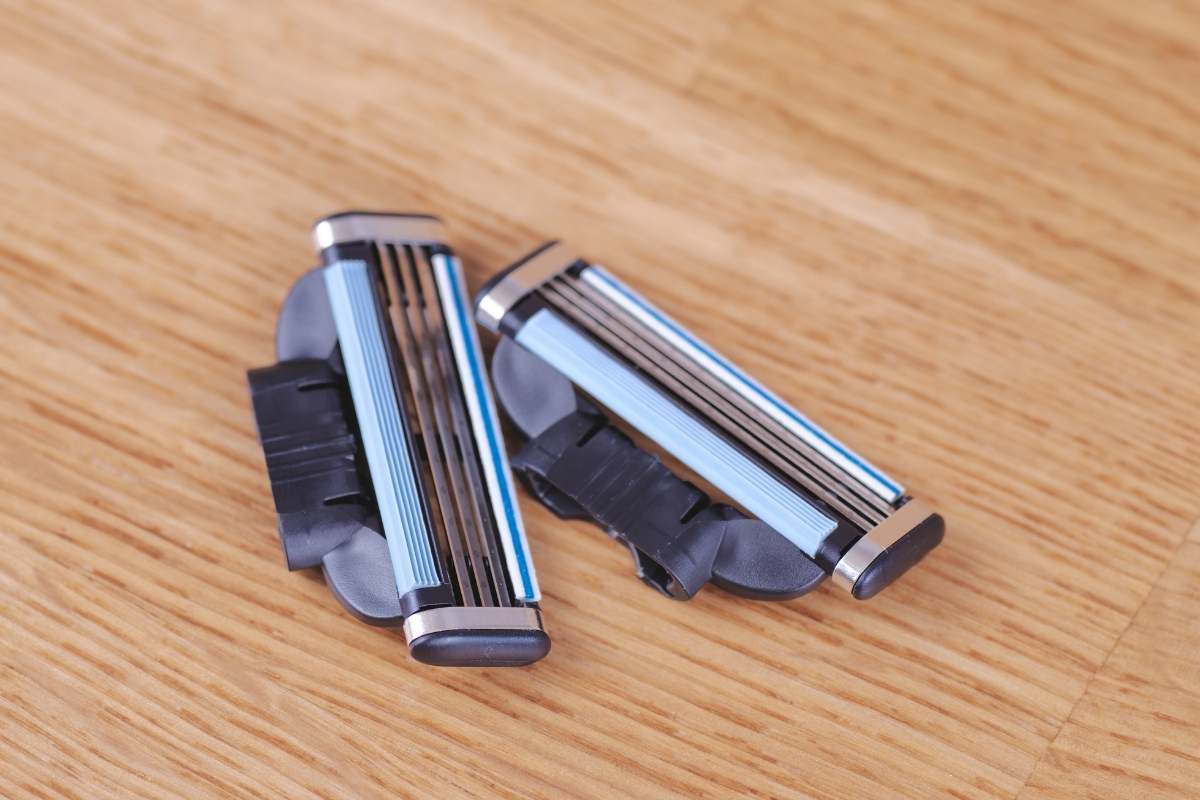
Blades: the part you replace most often
A blade is the shortest-lived thing in the kit and the most common cause of a rough shave. A dull edge tugs at the hair and scrapes the skin, so you press harder and take more passes, and that is usually where razor burn starts. Dermatology guidance is direct about it: use a sharp razor and change the blade as soon as it becomes blunt or picks up nicks.
How often that is depends on how often you shave, how coarse your hair is, and how well you dry the blade between uses, so any calendar is a rough guide. How often you should change your razor blade covers the per-blade numbers, the drying routine that buys extra shaves, and how to tell a finished blade from one that is merely a day old.
One boundary is worth setting: a blade is never worth nursing. If it pulls, it is done. Cartridge blades cannot be sharpened at home, and double-edge blades are cheap enough that the experiment is not worth the risk to your skin.
The razor body: corrosion, and one bad drop
A metal razor should outlive many blades. What ends it is water left on it. MÜHLE’s care guidance is specific: rinse the soap residue off after each shave, pat the pieces dry with a soft cloth, and keep the razor out of consistently damp places, because rust and hard-water spots on the chrome can eventually damage the threads and shorten the razor’s working life. The same guidance recommends oiling the threads of chrome pieces, every three to four weeks for the parts in its own range.
Those threads are the entire mechanism. A razor whose head no longer tightens down squarely holds the blade at an angle, and no amount of technique corrects that. Once a thread is stripped, or the plating has lifted and the metal underneath is pitting, the razor is finished. That is a replacement rather than a repair, unless the razor is valuable enough to send to a specialist. If you are choosing the next one, how to choose a safety razor covers the construction details that decide how a body holds up.
The other ending is mechanical. Drop a razor on a hard floor and you can bend a guard bar or a top cap. The check takes a few seconds: load a blade, hold the razor up, and look along the edge. If the blade gap is visibly uneven from one end to the other, or one side shaves while the other scrapes, the geometry has gone.
Brushes: shedding, splay and dried soap
Brushes get replaced for the wrong reason more often than any other tool. A brush that sheds a few hairs in its first week is settling in. A brush that starts shedding after months of good service is usually dirty rather than worn out, and dried soap residue is one of the main causes. You can see it as white deposits in the hair or on the handle, and it raises dust when the brush is dry.
The clean that fixes it: run warm water into the middle of the knot, part the hair and stroke through from several angles until no lather is left in the center, then shake out the excess and hang the brush bristles-down to dry. The water should be warm rather than hot, and detergents, vinegar and borax should stay out of it.
Replace the brush when cleaning no longer helps and one of these is true:
- It keeps losing hair after a proper clean and a full dry.
- The knot has developed a hole in the center or has splayed flat, so it no longer picks up soap properly.
- The handle has cracked, or the knot has come loose from the handle.
- It smells of mildew that does not clear after washing and drying.
Natural badger is more sensitive to dried residue than synthetic fiber, which is why a neglected badger brush is often the one that fails first. If you are replacing one, our brush picks compare badger, boar and synthetic for people who want low maintenance against the traditional feel.
Trimmer and clipper blades: sharpen, replace the blade, or replace the tool
Electric cutters fail differently from razors. The blade does not rust away; it wears where the two toothed plates rub against each other. Wahl puts the lifetime of a blade down to how often you use it and how regularly you clean and oil it. Its own UK service exchanges blunt blades for a pre-sharpened set, provided the blade set is sharpenable and undamaged.
That gives three outcomes, and the symptom points to which one:
- Cuts slower, pulls, or leaves lines while the motor still sounds normal: the blade set is dull. Clean and oil it, then replace the blade set if the cut does not come back.
- Gets hot quickly or rattles: the blade is worn or the spring tension has gone. Same answer, a new blade set.
- Runs but stalls under load, or will not hold a charge: the tool is failing, not the blade. A new blade set will not fix it.
Chipped or bent teeth are not a sharpening job. A blade that has lost teeth will pull hair whatever happens to the edge, and that is the point at which a blade set is replaced rather than restored.
Keeping the blade clean is what stretches the interval. How to clean a beard trimmer covers the routine, and cleaning a nose hair trimmer covers the small cutters that clog fastest. If the verdict is a new tool rather than a new blade, our beard trimmer picks are organized by the job the trimmer has to do.
Electric shaver heads are a scheduled part
For foil and rotary shavers the maker publishes an interval, and it is shorter than most people assume. Braun recommends a new head every 18 months. Philips puts its shaver heads at around two years, and its Series 5000 refill page puts its shaver heads at 9 million hairs within two years. Panasonic separates the two wear parts, with the outer foil at once a year and the inner blade at once every two years. Philips rates its OneBlade blades at about four months.
Those are performance intervals rather than failure dates. The shaver keeps working with a tired head; it simply shaves less closely and needs more passes, which is the kind of gradual decline people adapt to instead of noticing.
Two things are worth checking before you buy a head. Clean it properly first, because a head packed with hair and sebum behaves like a worn one. And confirm the model number, since heads are not interchangeable between models. How to extend the lifespan of a shaver head has the model-by-model detail and the cleaning routine that gets the full interval out of a head.
Bowls, combs, scissors and strops
These are the parts of a kit that tend to go unexamined until they fail.
A shaving bowl fails when it chips or cracks. A crack catches lather and eventually leaks, and a wooden bowl that has dried out and split is the same problem arriving more slowly. Neither is dangerous, but either one makes worse lather than a sound bowl. Our bowl picks cover steel, ceramic and wood.
A comb fails at the teeth. Missing or bent teeth leave tracks in a beard, and a molded comb with a rough seam along the teeth will drag and split hair as it passes. Saw-cut teeth with rounded tips are the ones that survive daily use. What a comb is made of matters more than the brand on it, and our comb picks cover the materials that hold up.
Scissors blunt more from misuse than from use. Cutting paper, dropping them, or trimming a dry beard all take the edge off, and a blunt pair folds hair instead of cutting it. Professional sharpening is worth pricing before you buy a replacement pair. If the pivot has developed play, sharpening will not fix that. Our barber scissors picks explain what separates a pair that can be sharpened repeatedly from one that cannot.
A strop is the item people replace too eagerly and maintain too little. Leather does not sharpen; it realigns the edge and removes no steel. What ruins a strop is a cut face, usually from flipping the razor over the edge instead of over the spine, or a leather surface loaded with old abrasive paste. Light surface nicks can often be sanded out and re-conditioned. One cut deeply, or hardened and glazed, is finished. And if a sound strop no longer brings the edge back, the razor needs honing rather than a new strop: how to sharpen a straight razor covers that line.
What to do with the old one
Used blades are the only part of a kit that is genuinely hazardous. San José’s municipal recycling guide is one clear example of the handling advice: wrap the blade in tape or paper, or put it in a sharps container, then dispose of it in the garbage or take it to a sharps collection point. Loose blades dropped into a trash bag can cut through it. Your own municipality may collect differently, so it is worth checking.
The same guidance separates handles from blades: metal handles can go as scrap metal and plastic ones belong in the garbage, but a handle in good condition is worth keeping as a spare after its head has gone. Some brands run mail-in recycling programs for blades, razors and their packaging, which is worth checking before you throw out a year’s worth of steel. The environmental impact of blade disposal goes further into that.
Electric tools are electronics. A shaver or trimmer with a failed battery is e-waste rather than household garbage, and a blade set that still cuts is worth salvaging before the tool goes.
A five-minute check, once a year
Run through this and you will catch most failures before they show up in a shave.
- Blade: does it pull on the first pass? Replace it.
- Razor: does the head tighten down squarely, and is the plating intact around the threads? If not, the razor is done.
- Brush: any white residue in the knot? Clean it. Still shedding after a full dry? Replace it.
- Trimmer: does it cut at the speed it used to, and does the blade run cool? If not, clean and oil it, then replace the blade set.
- Electric shaver: when was the head last changed? If you cannot remember, it is overdue.
- Bowl, comb, scissors, strop: any chips, missing teeth, play in the pivot, or deep cuts in the leather?
- Storage: is anything sitting wet in a closed cabinet or a travel case? That single habit shortens the life of everything above.
Common questions
Is it worth sharpening instead of replacing? For clipper and trimmer blade sets, sometimes, if the teeth are intact. For scissors, usually, if the pivot is sound. For razor blades, no.
Does a more expensive razor last longer? Not reliably. What lasts is the material and the plating, and what ends a razor is water left on it plus a drop on a tiled floor. A cheap razor that is rinsed and dried will outlast an expensive one that lives in the shower.
The blade is new and the shave is still rough. What now? Then the blade is not the variable. Prep, pressure and direction are the next things to check, and preventing razor burn and irritation covers those before you spend anything.


Leave a Reply