A beard comb is one of the cheapest tools you will buy for your beard, and the material matters more than the price tag. This guide explains how wood, horn, metal and the better plastics actually differ — how they feel in the beard, how they handle static and snags, and what each one asks of you in return. It is for anyone buying a first comb or replacing a flimsy one. If you only ever run clippers through your beard and never shape or detangle it, you can skip this.
What matters before the material
Two things change how a comb feels more than the label on it. The first is how the teeth are made: the best combs are saw-cut and then hand-polished, so the edges and tips are smooth, while cheap injection-moulded combs often keep a fine seam along every tooth that can catch hair and scratch skin. The second is tooth spacing — a wide-tooth end for detangling a thick beard, a fine-tooth end for a moustache or shorter growth. Material sits on top of both: it decides how much static the comb builds up, how warm or brittle it feels, and how you have to store and clean it.
Wood: the safe default
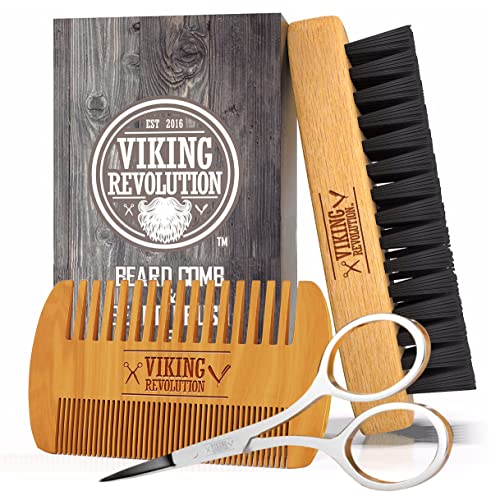
Wood combs — sandalwood, pear wood, bamboo and cedar are common — are the usual first recommendation, and rightly so. Wood builds up very little static, its teeth are naturally gentle, and its slightly absorbent surface grips beard oil and balm well enough to spread them through the beard as you comb. The trade-offs are real: wood dislikes a long soak (wipe it clean rather than leaving it wet) and can turn rough if it dries out, so a drop of oil now and then keeps the teeth smooth. Pear wood is a practical choice for most beards.
Cellulose acetate: the good ‘plastic’
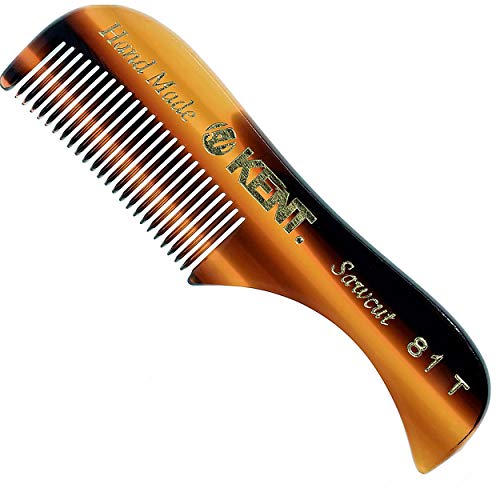
Most quality combs sold as tortoiseshell or “hard rubber” are actually cellulose acetate, a plant-based plastic. Cut and polished properly, a cellulose-acetate comb has smooth, rounded teeth, does not shed fibres, and — unlike cheap moulded plastic — it will not snap the first time it is dropped. Kent’s combs are the long-standing example: saw-cut, hand-polished and made in England, with folding pocket versions that tuck a fine-tooth and a wide-tooth section into one compact tool.

Horn: traditional, gentler, fussier
Horn combs (buffalo or ox horn) are the gentle traditional option: smooth, warm in the hand, low-static and kind to fine or brittle hair. They are also the fussiest. Horn is brittle if dropped and can warp or crack if left wet or in a hot car, so it is a tool to look after rather than leave in a damp bathroom. Choose one if you like how it feels and will keep it dry; otherwise a good wooden or cellulose-acetate comb does the same daily job with less worry.
Metal: durable, but for a specific job
Stainless-steel combs are effectively unbreakable and glide well, but they are the worst offenders for static and their teeth can feel cold and unforgiving on fine hair. A metal comb suits a durable, easy-to-sanitise tool — a barber’s kit, for example — more than a daily beard comb. If you do use one, keep it for coarse, thick hair and comb with light strokes.
Cheap moulded plastic: where to be careful
Not all plastic is bad: cellulose acetate is a plastic, and it is excellent. The material to be wary of is the cheapest injection-moulded kind, where every tooth can carry a rough seam that snags hair and scratches skin. On a tight budget, look for a comb described as saw-cut rather than moulded, even in plastic, and you avoid most of the trouble.
How to choose in one minute
- Thick, curly or long beard → start with a wide-tooth wooden comb, and add a brush to lift and spread oil.
- Fine or thinning beard → a finer-tooth cellulose-acetate or horn comb is gentler and less likely to snag.
- Moustache only → a small fine-tooth comb is enough (see our guide to choosing a moustache comb).
- Travel → a compact folding or mini comb that will not get crushed in a wash bag.
- Budget → a saw-cut comb beats a moulded one at the same price.
If you want the comb and the brush in one purchase, a combined set is the simplest way to start — we look at one in this Viking Revolution comb-and-brush set review.
A short word on care
Whichever you choose, keep it dry, clear the teeth of hair and product every week or two with warm water and mild soap, and never leave a wooden or horn comb soaking. A quick wipe and the occasional drop of beard oil will keep the teeth smooth and the comb usable for years. For a step-by-step routine, see our guide to maintaining and cleaning a beard comb.
Before you buy
Check the current configuration and availability, and prefer a comb whose teeth are described as saw-cut and polished rather than moulded. Material sets how the comb feels and how much care it needs; it does not change the basic jobs — detangling a thick beard, tidying a moustache, and spreading oil evenly.


Leave a Reply