A good pair of scissors does one job well: it cuts hair cleanly, first time, without folding or dragging it. This guide is for anyone who cuts hair at home — their own, a partner’s or a child’s — or who keeps a fade, neckline or beard tidy between proper cuts, and wants to know which pair to buy and what changes as you spend more. Six current options are below, from a low-cost basic shear to a professional pair for detail work, each with the job it suits and the trade-off you accept. If you are taking length off in bulk or cutting a full head of hair, the scissors are only half the kit; our guide to barber clippers covers the machine that does the rest.
How to choose hair cutting scissors
Most of the price difference between scissors comes down to four things. None of them is brand magic, and all of them change what the scissors feel like in your hand.
Size
Hair cutting scissors are sold in lengths, usually from about 4.5 inches to 7 inches, measured across the whole shear. A 5 to 5.5 inch pair is a common all-round size: short enough to control, long enough to cut a section in one go. Longer 6.5 inch shears suit larger sections and hands, and a small 4.5 inch pair is for detail and point cutting rather than bulk. There is no correct number; there is the size that matches the length of your fingers and the way you cut.
Cutting shears vs thinning shears
These are two different tools, and the names are worth keeping straight. A cutting shear has two plain blades and cuts every hair between them, so it shortens hair. A thinning shear (or texturizing shear) has one toothed blade and one plain blade: it cuts only the hair caught in the teeth and lets the rest pass, so it removes bulk and softens a line without taking length off. If your hair or your beard is thick and heavy, a thinning shear is the tool that helps — but it will not shorten hair, so it is a second pair rather than a replacement.
Blade edge and handles
Cheaper shears usually have a beveled edge: a wider cutting angle that is durable and easy to sharpen. Better ones are described as convex or razor edge, honed thinner for a cleaner pass on dry hair, though an edge that fine asks for more careful handling. Handles come in two layouts. Straight handles keep the finger ring and the thumb ring level, which is easier to learn on. Offset handles drop the thumb to a natural angle and let you work with your elbow down, which many people cutting their own hair find more comfortable for longer sessions. Left-handers should buy a left-handed pair: a right-handed shear used in the left hand pushes the blades apart instead of together, so it folds and drags hair rather than cutting it. For a beard or facial-hair tidy-up, a smaller pair of scissors is easier to aim: see cutting split ends with beard scissors for where a small shear does its best work.
What to check before you buy
- The job first: cutting hair, thinning bulk and trimming a beard are different jobs; buy for the one you actually do.
- Size in your hand: a size that feels natural in your fingers, not the longest on the page.
- Left-handed or right: a mirrored left-handed pair if you cut with your left hand.
- What comes in the box: a case and a comb are genuinely useful; a full kit is worth it only if you will use the pieces.
- What you give up: spending less usually means a plainer edge, plainer steel and no case; spending more buys a finer edge and better balance, not a guarantee against a bad haircut.
The 6 best hair cutting and barber scissors
Six current options, each with the reader it fits and the trade-off it asks you to accept. Live prices and availability are on the cards.
Equinox Professional Razor Edge Series — best overall
The pair to buy if you want one do-everything shear and no surprises. It is a 6.5 inch shear in Japanese stainless steel, with a razor edge and a fine adjustment tension screw, so you can tighten the pivot as the blades loosen with use rather than replacing the scissors. Who it suits: most people cutting hair at home who want a well-known, mid-sized pair that covers whole-head cuts, fades and beard tidying. What you give up: it is a plain stainless-steel shear rather than a professional-brand one, it comes without a case, and 6.5 inches is a long shear if you have small hands or only ever cut a short beard.

Facón Razor Edge Hair Cutting Scissors — best budget pair
The cheapest pair here that still reads like a real hair shear rather than a stationery one. It is a 6.5 inch razor-edge shear in Japanese stainless steel, sold for men, women and kids. Who it suits: a first pair, a spare for the bathroom drawer, or a household that wants to try home haircuts before spending more. What you give up: at this price you get the basic steel and finish and no case or accessories, and a shear that is replaced rather than serviced when the edge dulls. It will cut hair; it is not built to be kept and sharpened for a decade.

Equinox Professional Thinning Shears — best for thinning and texturizing
The second tool that helps with thick hair. This is a 6.5 inch thinning shear with one toothed blade: it takes weight and bulk out of hair and softens a hard line without shortening it. Who it suits: anyone whose hair or beard grows thick and heavy, or who wants to blend the ends of a home cut rather than leave a blunt edge. What you give up: it is a specialist, not a general cutter — it will not shorten hair, so you still need a cutting shear alongside it, and the teeth take a little practice to use evenly rather than randomly.

Sirabe 10-Piece Scissors Set — best all-in-one kit
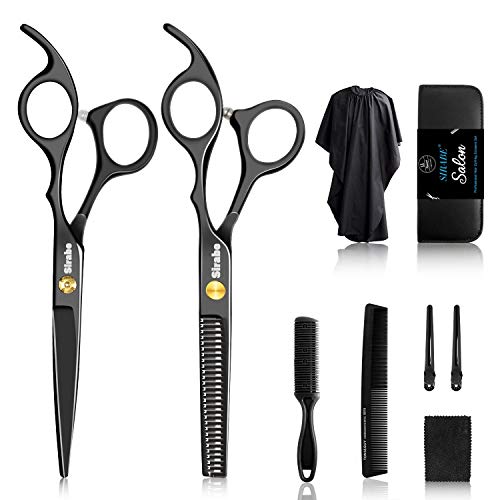
If you would rather buy everything for a home haircut once, this set bundles a cutting shear and a thinning shear with a comb, a cape and sectioning clips. Who it suits: a household doing its own haircuts that wants both types of shear and the accessories in one purchase. What you give up: the shears are a lesser-known brand, so long-term spares and sharpening are less certain than with an established maker, and you pay for pieces you may not use. Kit shears at this price are usually the compromise; if the cut quality matters most, buy the shears separately.
Left Handed Hair Scissors, 5.5 inch offset — best for left-handers
Left-handers get a raw deal in scissors, because most pairs are made for the right hand and work badly when reversed. This is a genuine left-handed 5.5 inch shear with offset handles and convex blades, supplied in a presentation case. Who it suits: anyone who cuts hair, their own or someone else’s, with their left hand and is tired of a right-handed pair pushing the hair apart. What you give up: choice and length: left-handed shears are sold in far fewer models and sizes, and 5.5 inches is shorter than the 6.5 inch general-purpose shears above, so it is a controlled all-rounder rather than a bulk cutter.

Fagaci Professional 4.5 inch — best for precision and detail work
The step-up pair for detail. It is a small 4.5 inch shear with thin blades, meant for precise, close work rather than bulk cutting. Who it suits: someone who already cuts hair and wants a light, short shear for point cutting, trimming around the ears and neckline, and finishing a beard or fade line. What you give up: the price, and the short length — 4.5 inches is not the shear to take bulk off a head of hair. Buy this as the detail tool in a kit, not as your only pair.

Scissors or clippers?
Scissors cut hair dry, in small controlled sections, and are the tool for shaping, blending and detail. Clippers take bulk length off quickly and set a consistent length with a guard, which is what you reach for on a full head, a buzz or a fade. Most home cutting uses both: clippers for the bulk and the sides, scissors for the top, the blend and the finish. A trimmer is a third thing again — a narrow blade for edges and hairlines. If the tool names are blurring together, the difference between clippers and trimmers sorts them out, and the clipper roundup linked at the top covers the machine side.
Looking after shears
A shear cuts badly long before it stops cutting, and usually because the pivot is loose or the edge is dull, not because the scissors are finished. Tighten the tension screw in small steps until the blades close cleanly and cut without pushing the hair; keep the blades dry and free of hair and product; and store them closed, away from moisture, so the edges are not knocked. There is a right way to put them away, and doing it saves an early sharpening: our guide to how to store trimming scissors safely covers it. When the edge starts folding or dragging hair instead of cutting it, the shear needs sharpening — cheap shears are often replaced at that point, better ones are worth servicing.
The bottom line
For most people cutting hair at home, the Equinox Professional Razor Edge is the pair to buy: the right mid-length size, a razor edge and a tension screw you can adjust. If you want to spend as little as possible to try home haircuts, the Facón gets you started; add the Equinox thinning shears if your hair is thick. The Sirabe set covers everything in one box, the left-handed 5.5 inch pair solves the mirrored-grip problem, and the Fagaci 4.5 inch is the detail shear to add once you cut hair often. Whatever you choose, keep the pivot tight and the blades dry, and buy the size that fits your hand rather than the longest pair on the page. If the finish you want is skin-smooth, remember that scissors cut hair but do not shave skin — that final pass is a shave, and shaving your head smooth is the guide for it.


Leave a Reply