A double-edge blade is a small piece of sharp steel with no wrapper once you have unwrapped it. When it dulls, you are holding something you cannot put in the bin loose, cannot leave on the sink, and should not drop in a recycling box on its own.
A blade bank is the simplest answer: a sealed tin with a slot on top that you post used blades into and forget about. This one is a metal case rated for 300-plus blades, and it is a cheap, small case built for exactly that job, and one that does not look like a medical object on the shelf.
It suits you if you shave with a double-edge razor and want a permanent place for used blades. Skip it if you use cartridges, which contain their own blade, or if your household already runs a proper sharps container for other reasons. The rest of this page is about where the tin helps, where it quietly stops helping, and the free alternative that does most of the same job.
What a blade bank actually solves
With a cartridge razor the blade is inside a plastic head, so disposal is a plastic problem. With a double-edge razor the blade is bare. It comes out of the razor as a loose, thin, still-sharp rectangle, and that changes the disposal question completely: the risk is not the blade in the bin, it is the blade against the liner when the bag is lifted, or against a hand reaching into the bathroom bin.
Containment is the entire job. A blade bank holds blades in one rigid object so that nothing loose ever enters the waste stream, and when it is full the whole object goes to metal. If you want the longer argument about why blades should not go into household waste at all, that is covered in what happens to blades that go in the household trash.
What the ZOMCHI bank is
A sealed metal case in black, with a slot cut in the top face and no other opening. There is no lid to remove, no window, and nothing to open once it is in use, which is the point: if the case cannot be opened, the blades cannot come back out.
- Build: metal body, sealed, single slot opening on top.
- Capacity: the manufacturer rates it at more than 300 used blades.
- Size: roughly 2 inches square and 2½ inches tall, about 1.8 ounces — small enough to sit beside a shave bowl.
- Blade type: double-edge blades, which is what the slot is cut for.
- End of life: case and blades are both metal, so the full tin is metal scrap.
Because the body is sealed rather than clear, there is no fill line to watch. You are working from the stated capacity instead, which is why the number above matters more than it would on a clear container.
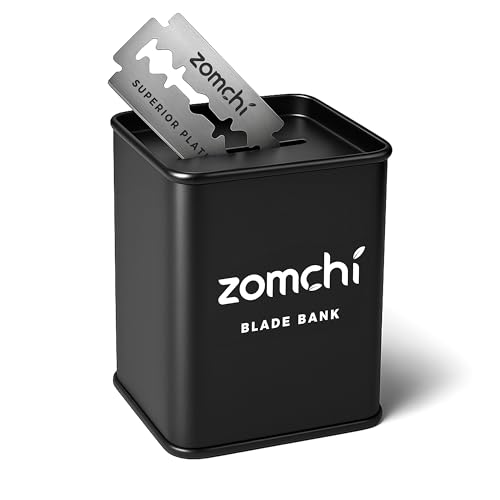
Check the current price and availability on the card above before you decide; the capacity and finish are what you are judging, not the listing photo.
How you use it
Stand it upright somewhere dry near where you shave: a shelf, the inside of a cabinet, a dopp kit if you travel with blades. Change the blade over the tin, drop the old one through the slot, and put the new blade in the razor in the same motion. Blades go in one at a time and lay flat; forcing a second one in on top of a jammed blade is how the slot gets blocked.
The arithmetic is worth doing once. At one blade a week, 300 blades is close to six years of blade changes, so most readers will fill this tin once and never think about it again. If you change blades every two or three days, that window shortens to roughly two years — still long enough that the purchase is a one-time decision rather than a routine cost. If the blade-change rhythm itself is still new to you, the first month of shaving with a safety razor walks through when a blade is actually done.
Where it stops helping
Three limits are worth knowing before you buy, because each one is the reason someone else’s recommendation does not apply to you.
It is not a sharps container. US household guidance puts used sharps into an FDA-cleared sharps container first, and a blade bank is not that object. If anyone in the house uses needles, insulin pens or lancets, a cleared container is the right purchase and this tin is a supplement for blades at most.
The slot decides what fits. Double-edge blades go in. Single-edge or artist-club blades, snapped half-blades with rough edges, and cartridge heads are a different shape and a different problem.
You cannot see how full it is. A sealed body protects what is inside, and it also hides the fill level. If overfilling worries you, the stated capacity and your own blade rate are the only two numbers you have.
If you would rather not buy one
You do not have to. Household sharps guidance is explicit about the fallback: if an FDA-cleared container is not available, use a strong plastic container such as a laundry detergent or bleach bottle, make sure it is leak-resistant, keep it upright, and use one with a tight-fitting, puncture-resistant lid. When it is about three-quarters full, close it and follow your local rules for disposal.
Two rules apply either way: never put loose blades in a trash can or a recycling bin, and never flush them. That guidance comes from the same FDA-derived material, and it is the part that actually protects the person carrying the bag.
So the honest comparison is not tin versus nothing. It is tin versus a detergent bottle under the sink. The tin wins on size, on having a slot sized for blades rather than a cut you make yourself, and on being something you are willing to keep in sight. The bottle wins on being free and already in the house. Both contain blades; only one of them is designed for it.
Who should skip it
- Cartridge shavers. There is no loose blade to contain, so the object has no job in your routine.
- Households with medical sharps. A cleared sharps container is the primary purchase; add a blade bank only if blades are piling up separately.
- Very slow blade users with a safe container already. At two or three blades a year, a labelled tin or bottle does the job and the capacity advantage never gets used.
Before you buy
Three checks are worth thirty seconds each. First, count your blade changes: the 300-blade rating is generous, and someone changing blades twice a week still gets years out of it. Second, check what your local metal recycling or household hazardous waste collection accepts, because a sealed tin full of blades may need a scrap metal drop-off rather than the kerbside bin. Third, decide whether you want the tin at all or would rather run the detergent-bottle method — both are defensible, and the tin is the version you are more likely to keep using.
If you are still working out which blades you will be disposing of, the blade packs worth buying for sensitive skin is the companion decision; a 100-blade pack is roughly where a bank like this makes sense as a permanent fixture rather than an experiment.
The short version: a sealed metal tin is the right shape of answer to used double-edge blades, and this one is well built for the job at a price that disappears next to the blades it holds. It is not a sharps container, it will not tell you when it is full, and a bottle under the sink is a legitimate alternative. Buy it if you want the permanent, presentable version of containment. Skip it if your blades never leave a cartridge.


Leave a Reply