The Viking Revolution beard comb and brush set puts two tools in one purchase: a dual-action pear wood comb, a brush with natural boar bristles, and a velvet pouch to carry them in. Whether it is a good buy has less to do with the set than with how much beard you have right now.
Buy it if you want both tools at once and your beard has reached the length where a brush alone stops keeping it tidy. Skip it if you are in your first months of growth, because the brush is the tool you will actually reach for; skip it if you want one thin tool for a bag, because a comb on its own is slimmer and cheaper; and skip it if you already own a comb, because you would then be paying mostly for a brush.
What is actually in the set
The set contains three things, and the product listing names all of them: a comb in pear wood with two tooth spacings, a brush with natural boar bristles, and a velvet travel pouch.
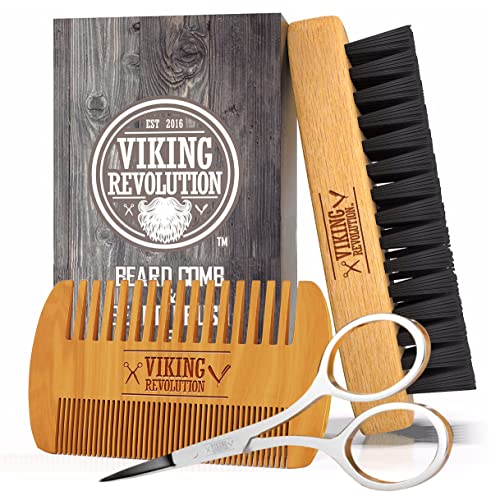
The comb is dual action, which means one edge carries fine teeth and the other carries coarse ones. Two tools in one body: coarse teeth to open a tangle, fine teeth to go over what is left.
The brush is boar bristle rather than synthetic. Its job is different from the comb’s, and that difference is the whole reason a set makes sense.
The pouch is for travel. At home it is packaging; in a wash bag it keeps the two tools together.
Do you need both a comb and a brush?
This is the question that decides whether the set is good value, and it has a real answer rather than a matter of taste. Cremo, who sell both tools, set the two jobs out plainly: the brush is for styling and taming surface hair and for working oil or balm through the beard, while the comb is for detangling, including the compressed layers underneath that a brush skims over. They also note the practical split: a comb is thin and easy to travel with, a brush is bulkier.
Their recommendation is a brush first, with a comb introduced at roughly three months of growth. That is a vendor’s guidance, not a rule, but it matches how the tools behave. On a short beard there is nothing for a comb to detangle, so the brush does the whole job. Once the hair is long enough to knot and to sit in layers, that is the point where a comb stops being optional.
So the honest test is this. Short beard, balm or oil in the routine, no knotting: buy the brush and leave the comb for later. Long or coarse beard that tangles when you wash it: the pair is genuinely useful, and buying them together is the simplest way to get both. Everything in between is a judgment call about how much hair you expect to have in six months.
The comb, and why the material matters
Pear wood is the comb’s material, and it has to be kept dry, which the care section below deals with. If the material decision is still open for you, which comb material suits your beard compares wood, cellulose acetate and metal on the points that actually differ.
Start with the coarse edge on a tangled beard and finish with the fine edge. Worked the other way round, the fine teeth catch on knots before the coarse ones have opened them.
What the boar bristles are for
A brush is not a comb with more teeth. Cremo describe its job as styling and taming the surface hair and working oil or beard products through the beard, and the comb’s as detangling the layers underneath. They also draw a practical line between the two: the brush on dry hair, the comb on hair that is wet or already has product in it.
Two practical notes. A stiff boar brush on a coarse beard with sensitive skin can feel scratchy, so go lighter with it rather than harder. And boar bristle is an animal product: some readers will not want that in a grooming kit, and synthetic brushes exist if that matters to you.
Where the set falls short
Four honest limits, none of them a reason to avoid the set but all of them reasons someone should buy something else:
- You pay for the tool you will not use. The set’s price covers a brush and a comb. If only one of them has a job in your routine, a single tool is the better buy.
- It is a convenience purchase, not an upgrade. Nothing about buying the two together makes either one better than a good comb bought alone or a good brush bought alone. What you get is one order and one pouch.
- The wood needs discipline. A wooden comb left soaking, or kept in a wet wash bag, is the failure every care guide warns about. That is a real constraint, not a formality.
- Size is the thing you cannot judge from photographs. If a pocket-sized comb is what you are after, check the dimensions before ordering rather than guessing from the listing images.
Two minutes of care keeps both tools working
Neither tool is high-maintenance, but both need doing: the wood has to be dried, and the bristles have to be cleared.
The comb. Wipe it with a cloth dampened in warm water and a drop of mild soap, then wipe again with plain water, and dry it on a towel. Do not soak it: that is the one point every source agrees on. A wooden-comb maker puts it directly: clean it under running water and dry it on a towel, never leave it soaking.
Oiling is where the advice splits, and it is worth saying so rather than picking a side. One comb manufacturer states that a wooden comb needs no regular oiling at all; plenty of grooming guides suggest an occasional drop worked into the teeth. What they agree on is the part that matters: do not leave it soaking.
For a comb that has picked up product or has been in a wash bag too long, how to clean a wooden comb properly goes further than the two-minute version.
The brush. Tap loose hair out of the bristles weekly, and wash it periodically with mild soap, rinse, and dry it bristles-down so water does not sit in the base. How to clean a beard brush without ruining the bristles has the full method, including what not to use on a boar brush.
Buying the set versus buying one tool
If you already know you want a comb and not a brush, or a brush and not a comb, the set is the wrong purchase and the alternatives are cheap. The same maker sells the wooden comb on its own, a single pocket comb with a case and the same dual-sided teeth, and that is the one-tool answer for travel.
If you want to see the whole field before choosing, the beard and mustache comb comparison lines up six combs by what each is for: the folding one for a pocket, the three-pack for several bags, the budget wooden all-rounder, and this comb-and-brush set for a beard that wants both tools. That is the right page if the decision is still open. This page answers the narrower question of whether this set earns its place in your routine.
The verdict
This is a sensible set for one specific reader: someone with a beard long enough to tangle, who uses a balm or oil, who does not already own either tool, and who wants the pair to travel together. For that reader the comb and the brush each do a job the other cannot, and buying them in one pouch is the simplest route to both.
It is a poor fit for a beginner a few weeks in, for anyone who owns a comb already, and for anyone who wants a comb thin enough to live in a pocket. In those cases one good tool is the better buy, and the pouch is not worth the difference.
If you are in the first group, check the current price and availability on the product card above. If you are in the second, start with the comparison and work back from the tool you actually need.


Leave a Reply