An electric trimmer is the quickest way to keep a mustache looking deliberate. It sets an even length, it draws a straight line above the lip, and it does both in a couple of minutes. This guide is for you if you already own a beard trimmer, an all-in-one groomer or a dedicated mustache trimmer and want a routine you can repeat. It is not a guide to shaping a full beard, and it is not the place to start if your mustache is still new: grow it out to roughly two centimeters first, or you will be shaping a patch rather than a mustache.
What you need
Very little, which is part of the appeal:
- A trimmer with a guard you can set, or a small detail head. A beard trimmer or all-in-one groomer with plastic guide combs covers the length; a dedicated mustache trimmer usually gives you a smaller head and a detail blade instead.
- A fine-toothed comb. Mustache hair is coarser than the hair on your head, and a comb with closely spaced teeth holds it straight while you cut. A beard comb is built for exactly this.
- Small, sharp scissors for the last few hairs and for the awkward ones under the nose.
- A razor and a little shaving cream if you want the skin around the mustache clean-shaven.
- A large mirror, plus a second angle so you can compare the two sides.
How an electric trimmer cuts (and why the guard decides the length)
A trimmer does not glide along the skin the way a razor does. It feeds hair into a blade that sits behind a plastic comb, which is why the guard, not your hand, decides how much hair is left. A 3 mm guard leaves 3 mm of hair across everything it touches; a longer guard leaves more. The bare head, with no comb at all, cuts close to the skin, and on a T-blade or detail trimmer it cuts closer still. That is the tool for the two edge lines and little else. Braun’s mustache and beard guide splits the job the same way, using the guard for an even base and the bare head to shape the outline around it.
Step 1: Start with dry hair, combed straight
Trim a dry mustache. Wet hair looks longer than it is, so a wet trim usually takes off more than you intended; Cremo’s guide is blunt about that point, and it is the most common way a mustache ends up shorter than planned. Wash and dry your face if you like, then comb the hair in one direction so no hairs are folded over each other. The comb does two jobs at once: it straightens the hair and it shows you where the ends actually sit.
Step 2: Set the lip line (the bottom edge)
The line above your lip is the one people notice, so set it first. Let your face rest in a blank, relaxed expression so the mustache sits where it naturally falls, then trim along the lip line with the blade parallel to your mouth. Work in short passes from the outside of the mouth towards the middle rather than one long sweep; Cremo’s step-by-step guide recommends small, gradual cuts for exactly this reason, and a long stroke is how a notch appears.
If your trimmer’s bare head bites, use its shortest guard for this line instead of pressing harder, and keep the corners as clean as the middle. A razor is the wrong tool on this line: on the upper lip it is easy to irritate the skin or leave yourself with bumps, so keep the blade for the skin around the mustache.
Step 3: Trim under the nose (the top edge)
Start under the septum, the middle between your nostrils, and work outwards along the top of the mustache in short cuts. Your smile lines, the creases that run from the nose to the corners of the mouth, are a natural place for the sides to end. How far you trim here decides the style: taking the top edge well down thins the mustache towards a pencil shape, while barely touching it keeps the fuller original look. If those hairs are hard to reach with a general trimmer, a nose and ear hair trimmer gets to them with less fuss.
Step 4: Even out the length
With the outline in place, reduce the bulk. Comb the hair up and away from the skin and trim whatever extends past the comb’s teeth, then repeat across the whole mustache; that is the method Cremo describes for an even result. With an electric trimmer there is a faster option: fit a guard and run the head over the whole mustache on one setting, checking the length after each pass. Start longer than you think you need. Braun’s mustache guide, for instance, uses a 10 mm comb as an even base, and 1 to 2 cm is the usual range for a mustache that still reads as full.
Step 5: Define the edges and check both sides
The finish comes from two lines: along the lip and around the corners. Trim them in short strokes and alternate sides as you go so the two halves stay even, which is what Braun’s guide suggests for the same reason. Then step back and look at your reflection from an angle rather than straight on, because an uneven corner shows up from the side first. Go back only for stray hairs, and use scissors for those.
Up or down?
Should you trim a mustache up or down? It is the question that produces the most contradictory advice, and the honest answer is that neither direction is a rule. What matters is which way you want the hair to lie. Comb the mustache in that direction, then trim whatever falls outside the shape you have in mind, which usually means cutting along the lip line and leaving the top edge as full as you can. Trimming up and trimming down mostly describe whether you are taking hair off near the nose or near the lip.
Scissors, trimmer or razor?
- Trimmer: the length, the bulk and the edge lines. Fast and repeatable, as long as the guard is right.
- Scissors: the last stray hairs and the awkward ones right under the nose. Slower and easier to get wrong, so save them for the finish.
- Razor: the skin around the mustache, meaning cheeks, corners and jaw. Keep it off the mustache itself.
Mistakes that make it look worse
- Taking too much off. Start on a longer guard; you can always go shorter, and hair takes weeks to come back.
- Trimming wet hair, which looks longer than it is.
- Long sweeps across the lip. Short passes keep the line straight and stop one slip from cutting a notch.
- Finishing one side before starting the other. Alternate as you go.
- Forgetting the hairs under the nose, which start tickling your lip before anything else does.
- Putting a razor on the lip line if your skin reacts easily. Nicks and bumps there are hard to hide.
What to buy
You can trim a mustache perfectly well with an all-in-one groomer you already own. If you are buying a tool for it, the useful question is whether you want one device to cover the whole routine or a small detail trimmer to sit beside what you have. If you are still working out what to look for, start with how to choose the right beard trimmer, then compare the best beard trimmers on this site. Three different approaches cover most situations, and each gives something up.
A guard-based trimmer for the length. The Wahl Groomsman kit is a rechargeable beard trimmer with guide combs for setting an even length, and it comes with a battery nose trimmer. It suits someone who wants one tool to hold a beard and mustache at a fixed length rather than a drawer of separate gadgets. The trade-off is that its head is a general beard head, not a fine detail blade, so the two edge lines take a little more care and a dedicated trimmer or a pair of scissors will still finish a corner more cleanly.

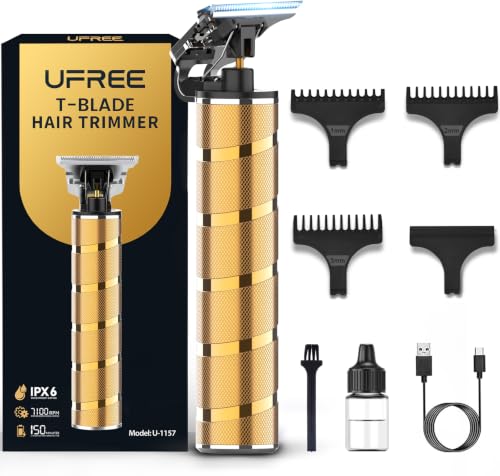
A detail trimmer for the edge lines. The Ufree T-blade trimmer is a zero-gap edger, which means the blade runs almost to the edge of the head and can follow the lip line closely. That is what produces a crisp line above the mouth and clean corners, and it is also the reason to keep it away from the middle of the mustache: with no guard it cuts to the skin. Treat it as a second tool rather than your only trimmer.
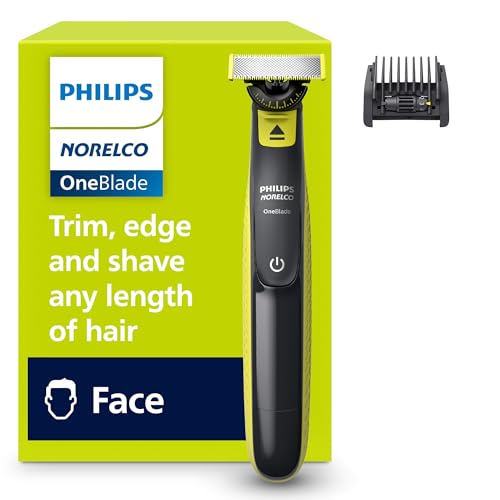
One hybrid tool for trimming and edging. The Philips Norelco OneBlade 360 is a hybrid face trimmer and shaver that works with length combs on a single blade, so it can set a length and tidy the outline with the same head. It suits someone who wants the simplest possible routine in one device and is happy to replace the blade when it dulls. The trade-off is precision at the corners, where a detail trimmer or scissors still do better.
Keeping it in shape
You do not need a full trim often. One or two top-ups a week, done while you are already at the mirror, are enough: comb the mustache down, look for the longer hairs and take those off. Cremo’s guide calls this a top-up trim and suggests it once or twice a week.
Clean the trimmer head after you use it. Hair and skin oil collect between the blade and the guard, and a clogged guard stops cutting evenly, which shows up later as a patchy length. Brush or rinse the head as the maker directs, and follow the same routine you would use to clean an electric razor. If you want to go further than trimming, a light wax holds a chevron or a curled end in place and the mustache wax guide covers how to apply it.


Leave a Reply