Two tools, one question: are you taking length off, or are you drawing a line? Clippers move through bulk hair over a large area – a head. Trimmers work short and precise – a beard, a neckline, the edge of a fade.
So the short answer is: if the job is a haircut, you want clippers. If the job is keeping facial hair tidy, you want a trimmer. Almost everything else in this decision follows from those two sentences.
What does not help is the label on the box. Philips sells one device as an “All-in-One Trimmer and Hair Clipper”, and a Wahl haircutting kit can include a cordless beard trimmer alongside the clipper. The noun is marketing. The blade and the guides it ships with are the tool.
One thing to get out of the way: if you already own a trimmer and you are reading this hoping to cut your own hair with it, you need a clipper. A trimmer is built to shorten hair you can see, not to take a head down cleanly, and that is a blade-width problem rather than an attachment one.
The three tools, one line each
- Clipper. Wide blade, a stack of guide combs sized for head-length hair, and enough motor to get through bulk. This is the haircut and fade tool. Many kits are corded.
- Trimmer. Narrow blade for close, detailed work: beard lines, neckline, sideburns, stubble. Sold with small attachments that hold a chosen length. Philips describes the job as neatening and styling stubble rather than removing hair.
- Shaver. Runs over the skin for a smooth, hair-free finish. Philips describes shavers as the smooth-finish tool with one length setting, and trimmers as the shaping tool with attachments.
If your answer is the shaver, stop here and read the electric razor guide instead – foil versus rotary is a different decision with different trade-offs.
Why “clippers are just bigger trimmers” is the wrong model
The size ladder is true, and it does not decide anything. Yes, a clipper is the bigger object, but size is what follows from the job. Two things actually decide which tool you are holding.
The blade is a different width. A wide blade covers ground and cuts a straight line across a head. That same width is clumsy at the edge of a beard, where you need to see the line you are cutting. It is the difference you notice on the first use, and it is why the two tools exist as separate product ranges rather than as one range of sizes.
The guides set a different range of lengths. Neither tool cuts at “one length” – that is a common misreading. Both hold length with a guide comb clipped over the blade, so the comb decides the cut and the motor only has to keep up. A clipper ships with combs for wearable head-lengths; a trimmer ships with small attachments for beard lengths. Same idea, different range, and that range is what you are actually buying.
Manufacturers’ own catalogues reflect the split. Philips lists Hair Clippers, Beard Trimmers and All-in-One Trimmers as separate categories, and its all-in-one trimmer range includes the option of eleven length settings on a single device.
What you give up with each one
- Clipper as your only tool: you get haircuts, and you lose the fine edge work. Some haircutting kits bundle a cordless beard trimmer for exactly that, which tells you how the makers see the two tools.
- Trimmer as your only tool: you get a tidy beard and clean edges, and you lose bulk removal. Trimmers are built to leave hair shorter, not to take a head of hair down.
- Shaver as your only tool: you get smooth skin and nothing to shape with. The shaver is the tool for a clean-shaven look, not for keeping facial hair.
Do you need both?
Usually not on day one, and the honest split is narrower than the shelves suggest.
- You cut your own or your family’s hair: buy the clipper first, and check the box for a trimmer before buying one separately – some kits include one and some do not.
- You only keep a beard, mustache or stubble: buy the trimmer and skip clippers entirely.
- You want one device for beard, body and general tidying, but not a full haircut: an all-in-one trimmer is the compromise, and it is a real category rather than a marketing trick – the maker lists the same device for beard, face, hair, body and intimate areas.
The one combination that wastes money is two tools that do the same job: a beard trimmer plus an all-in-one groomer covers the same ground twice.
A sensible clipper if the job is haircuts
A corded clipper kit is the low-risk first buy for home haircuts: the color-coded guide combs make it obvious which comb is which, and a taper lever lets you adjust the blend at the edge without swapping combs mid-cut. Corded means no battery fading halfway through a cut. What you give up is the freedom to cut anywhere without a socket nearby. If you want to compare the full field, start with the barber clipper roundup.

A sensible trimmer if the job is a beard
A rechargeable beard trimmer is the right shape of tool for line work: narrow enough to see what you are doing, with small attachments to hold a length. This kit also bundles a battery nose trimmer, which is the sort of extra that matters if you are buying one tool for the whole face. What you give up is bulk cutting power. For the wider choice, the beard trimmer picks and the guide to choosing one go deeper on blade and guard differences.

The one-tool compromise, if you want it
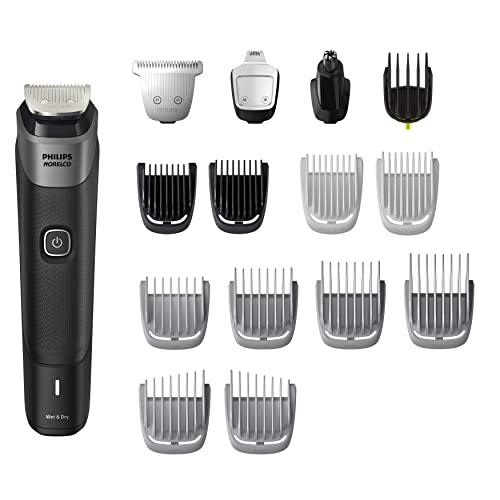
An all-in-one trimmer is what most people actually mean when they ask whether they need both: one handle, many attachments, enough to cover beard, body and general tidying. Philips sells this one as an “All-in-One Trimmer and Hair Clipper” with eighteen pieces, and states that it needs no blade oil – a small thing that removes an upkeep step. What you give up is a full haircut: this is not a substitute for a clipper if you are cutting head hair regularly. For body and intimate grooming specifically, the body trimmer guide covers the tools built for that skin.
What to check before you buy
- Blade width. Narrow for lines, wide for bulk. If a product page does not say, compare the product photos.
- Guides included. Count them and note the range. More combs means finer steps between lengths, which is the variable you will actually adjust during a haircut.
- Corded or cordless. Corded clippers cannot fade mid-cut; cordless trimmers travel. Pick the one that matches where you will use it.
- Water rating. If you plan to rinse it, check what the maker allows first – the electric razor cleaning guide covers which parts can be rinsed.
- What else is in the box. A second tool, extra combs or a nose trimmer can decide the purchase as much as the main unit.
The answer, in one line
Buy for the job you actually do: clippers if the job is a haircut, a trimmer if the job is a beard – and read the box for the attachments, not the noun.


Leave a Reply