You have one moisturizer. The shelf says you need two: a day cream for protection and a night cream for repair. Two bottles, twice the money, and almost nothing explaining what actually differs between them.
The useful version is short. The difference is weight and sunscreen. That is most of it. If you shave your face, the moisturizer you put on afterwards is already your daytime step, and a second, heavier product at night is optional: worth buying only if your skin is dry enough to want it.
Skip this if you are treating acne, have a diagnosed skin condition, or react to fragrance. Those are questions for a dermatologist, not for a product list.
What a moisturizer is actually doing
A moisturizer is not one ingredient. Dermatology sources group what is inside into three working parts. Humectants attract and hold water in the outermost layer. Emollients soften and smooth skin by filling the cracks in that layer, using oily substances such as lanolin or glyceryl stearate. Occlusives lay down an oily barrier on the surface that slows water loss, which is what makes the heavy products feel heavy.
That is why the same routine can be sold as a gel, a lotion, a cream or an oil. The form is a delivery choice, not a different promise. What changes between products is the balance of those three parts, and how heavy the result sits on your face.
If your skin feels tight and dry in general, the reason matters more than the bottle: how hydration actually works on men’s skin is the place to start.
What actually changes between a day and a night product
Two things, and neither is magic.
Weight
Night products are usually the heavier end of the range, closer to an occlusive layer. Day products are built lighter so they sink in and sit under everything else you put on your face. This is the difference you can feel on your fingers, and it is the one that decides most day-versus-night choices.
The rule in the dermatology literature is about how dry you actually are: very dry skin may benefit from a greasy, occlusive moisturizer, while slightly dry skin may only need a light one at night. Notice what that rule is not. It is not “one for day, one for night”. It is “light or heavy, depending on your skin”.
Sunscreen
Many day moisturizers are sold with sunscreen built in. If your daytime product carries no SPF, sun protection is a separate step, not something a second, heavier product quietly covers.
That is the honest reason the two-product system exists at all. A day product is a moisturizer plus sun protection. A night product is a moisturizer plus weight. Neither of those is a different kind of skincare.
If you shave, the order matters more than the bottle
The American Academy of Dermatology is specific about the sequence. Before shaving, wash with a non-comedogenic cleanser. While shaving, use a moisturizing shaving cream. Once you are done, rinse the shaving cream off with warm water, hold a cool, damp washcloth against the just-shaved skin, and apply a soothing aftershave product formulated to reduce the risk of razor bumps and irritation. A disposable razor gets replaced after five to seven shaves.
Read that sequence again and the day/night question answers itself: the product you apply after shaving is your daytime moisturizer. It is already doing the job the “day cream” is sold for, in the one moment your skin most needs it. A separate morning product on top of that is duplication, unless it is carrying the sunscreen you actually want.
If you use a splash rather than a balm, the technique of applying it without drying your face out is worth getting right: aftershave splash application.
When one moisturizer is enough, and when it is not
One product is enough when your skin is only slightly dry. Use it after you shave, and if you want it at night too, use it at night too. Nothing is missing.
A second, heavier product earns its place in three situations:
- Your face feels tight again by mid-afternoon, not just after washing.
- The light product stings, or disappears on cold, dry days.
- You want sunscreen in the morning and a richer layer at night, and you would rather not put another product over a heavy cream.
It does not earn its place because the label says “night”. Two products you understand beat three you bought because a shelf suggested them.
Three men’s moisturizers, and how to pick one
All three below are post-shave moisturizers from the site’s catalogue. None of them is sold as a sunscreen or lists SPF in its listing, so sun protection stays a separate step in the morning. Choose between them on three things: whether fragrance upsets your skin, how much product you get in the container, and whether you want to try the idea cheaply before committing. Any of the three works as the post-shave step; if you later decide you want a heavier night layer, that is a separate decision rather than a different category of product.
| The product | Choose it if |
|---|---|
| Plain: Art of Shaving balm, 3.3 oz, unscented | Fragrance irritates your skin, or you want the plainest option |
| Daily: Blackstone balm, 6 oz, sandalwood | You want the largest container and do not mind a scent |
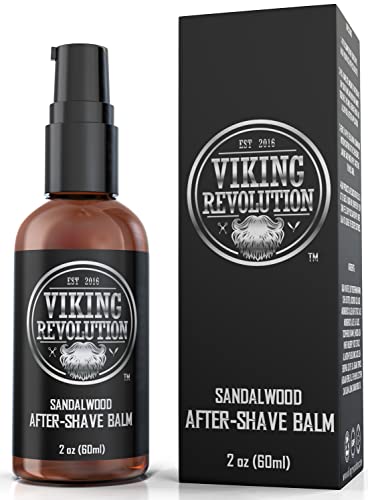
| Trial: Viking Revolution balm, 2 oz | You want to test a balm before spending more |
The unscented one
Sold explicitly as a face moisturizer, unscented, and described as clinically tested for sensitive skin. 3.3 fl oz. It is the most expensive of the three, and the one to start with if fragrance is what usually sets your skin off.

The large one
A 6 oz post-shave moisturizer described as a soothing cooling balm, with tea tree oil, shea butter, vitamin E and aloe, in sandalwood. Three times the volume of the small tub below, which makes it the sensible everyday container if you are not avoiding scent.

The small one
A 2 oz cooling balm, the cheapest and the smallest of the three. Buy this one to find out whether a balm works for your skin at all before committing to a bigger container.
If a product stings
Set it aside. A product that stings on freshly shaved skin is not doing you a favour, and no amount of “active ingredients” makes that acceptable. For reactive skin, the plainer route is the balm comparison for sensitive skin, which is the narrower list for reactive faces.
The short version
- Day and night products differ in weight and sunscreen, not in what they fundamentally do.
- After shaving, the product you apply is your daytime moisturizer. Get that step right first.
- Slightly dry skin can live on one light product. Very dry skin is the case that justifies a heavier occlusive layer at night.
- Buy a second product because your skin asks for it, not because the bottle says “night”.


Leave a Reply