Cremo’s Cooling Post Shave Balm is a 4 oz post-shave balm built around one idea: a strong cold sensation on skin that has just been shaved. It is the balm to buy if you actively want that shock of cold at the end of a shave, and it is the wrong balm if cooling is what your skin reacts to.
This review is for someone deciding between a cooling balm and a neutral one, or holding a bottle already and wondering whether the tingle is doing anything useful. Skip it if you want an unscented balm, if you prefer an old-fashioned alcohol splash, or if you are treating a skin condition rather than choosing a post-shave product. One practical warning first: the balm is no longer listed on Cremo’s own US store, so if you are shopping in the United States the buyable answer is the closest alternative below rather than the Cremo itself.
What the balm is, and what Cremo says it does
Cremo describes the balm as containing menthol “to deliver an icy cold sensation”, alongside shea butter, baobab seed oil and tamanu seed oil to help soothe and hydrate skin that has been irritated by shaving. The name on the bottle adds the rest of the pitch: refreshing mint, and a product sold on razor irritation.
It is worth separating two jobs in that description. The oils and shea butter are there to moisturise, and moisturising after a shave is not a marketing extra: dermatology guidance for wet shaving finishes with a moisturiser to rehydrate the skin. The menthol is there for sensation only. That distinction is the whole review.
Cremo’s own product page lists the balm as suited to combination skin, which is a useful signal for who it was formulated for, though “combination” describes skin type rather than tolerance for menthol. Those are different questions, and the second one matters more here.
What menthol cooling does, and what it doesn’t
Menthol does not lower the temperature of your skin. It creates the sensation of cooling by activating TRPM8, an ion channel in cold-sensitive sensory neurons, so the cold you feel is a signal from nerve endings rather than a measured drop in skin temperature. That is why it is a sensation you feel rather than a change you could measure, and why it fades on its own schedule.
None of that makes the sensation fake or useless. A cold sensation is genuinely pleasant when your face is hot and stinging after a close shave, and it can take your attention off a mild sting. What it does not do is treat anything. If you have razor burn, folliculitis or ingrown hairs, cooling relieves the feeling without changing the cause, and dermatology guidance puts that cause down to a blunt blade, shaving against the grain and going over the same area more than once. The fixes for shaving irritation are technique and product changes, not a colder balm.
There is also a real physical option if cooling is the goal: a cold water rinse at the end of the shave is standard wet-shaving advice for helping to reduce inflammation, and it costs nothing. A menthol balm is the version of that idea you can feel on your skin afterwards.
Who it suits
- You like a strong cold hit after shaving and would miss it if it went.
- Your skin tolerates scented products and menthol without stinging or redness.
- You shave your face or neck and want one product that moisturises and cools, rather than a splash followed by a separate moisturiser.
- You are buying for warm weather or after a shave that left your face feeling hot.
If you recognise yourself in that list, the balm does the job it advertises. The moisturising half is the part you keep it for; the cooling half is the part you notice on the day.
Who should skip it
Cooling is the one thing this balm is built to deliver, so if you do not want it there is no reason to buy it. That covers more people than the product page suggests.
- Sensitive or reactive skin. Guidance for wet shaving is explicit that people with sensitive skin should choose gentle products, and a menthol formula whose selling point is a strong mint scent is not the gentle option.
- Anyone who has reacted to a scented cosmetic before. Perfumes and preservatives in toiletries are common irritants, and cosmetic ingredients including fragrances are common allergens, so a product whose appeal is a strong mint scent is the wrong place to experiment.
- Eczema, rosacea or a current flare. Stinging is not a sign the product is working, and irritated skin does not need an active sensation on top of it.
- Anyone treating rather than maintaining. If shaving leaves you with a persistent rash, spots or ingrown hairs, the balm is not the answer and a pharmacist or doctor is.
The test is cheap: patch-test on the inside of your forearm and wait a day before putting it on a freshly shaved face. If you already know menthol stings you, believe that and stop there.
How to use it properly
Cremo’s own instructions are short, and they are worth following because the order is the part that matters:
- Rinse your face with cool water after shaving and pat it dry.
- Squeeze a small amount into your hands. The format is a tube you squeeze, not a pump or a jar.
- Massage it over your face and neck, focusing on the areas that usually get irritated.
- Let it settle before you dress or apply anything else.
Steps one to three are Cremo’s own wording in substance; the fourth is where the product page ends and the practical advice starts.
Two small adjustments make it work better in practice. Apply it to skin that is still slightly damp rather than bone dry, because a balm spreads further and absorbs more evenly that way. And keep the amount small on the first application: more product means a stronger sting, not a better result.
If your skin is stinging rather than pleasantly cool, wash it off with cool water and leave the face alone. Guidance for post-shave irritation is to avoid shaving until it settles, and a mild hydrocortisone cream can help with itching; a cooling balm is not the thing to add on top of a reaction.
The drawbacks worth knowing
The cooling does not last. When it has gone you have an ordinary moisturiser on your face, which is fine but is not the same experience. If the sensation is the reason you are buying, buy it for the sensation and not for lasting relief.
The scent is part of the product, not a side note. Refreshing mint is the reason to choose it and the reason to avoid it, and it is the last thing you want under a fragrance you wear.
It is a balm, not a serum or a gel. If you dislike the feeling of a cream sitting on your skin, a gel is the other way to get the cooling sensation, and there is one below.
And it is a comfort product with a short ingredient story: menthol for the sensation, and baobab and tamanu oils and shea butter for moisture. Nothing in that list is an exfoliant or an anti-inflammatory, and nothing in it treats ingrown hairs. Read it as a pleasant way to finish a shave and it will not disappoint you.
Can you still buy it?
This is where the review becomes practical. At the time of writing the Cooling Post Shave Balm is no longer listed on Cremo’s US store: the product page returns a 404, and searching the US catalogue for post-shave balms returns fifty-five items across two pages, none of them this balm. Cremo’s UK store still lists it, so the formula has not disappeared, but the direct US route has.
Marketplace listings for it come and go, and a listing that exists is not the same as a listing that ships. If you specifically want this bottle, check the seller and the delivery estimate rather than assuming it is the same product you read about here. If you want the effect rather than the brand, the options below are the honest substitutes.
What to buy instead
The nearest thing to the Cremo in the same job is another tea tree balm with a cooling finish. Blackstone’s post-shave moisturiser pairs tea tree oil with shea butter, vitamin E and aloe, and it is sold as a soothing cooling balm rather than a splash, so it is the same kind of product for the same moment in the routine. It does not name its cooling agent, so check the label if you specifically want menthol. One difference to check before you commit: this one is scented with sandalwood, so it is not a neutral choice for anyone who came here because mint was the problem.

If it is the balm sitting on your face you dislike rather than the cooling, the Jack Black gel is the alternative. It is a clear gel rather than a cream, and its listing names no oils or shea butter, which is what makes a balm feel heavier on the skin. On scent, be careful with the listing: it calls the product fragrance free, but the pack names aloe, sage and lavender, so read that as no added fragrance rather than no smell. If any scent at all is a problem, this is not the product for you.

Neither is sold as a treatment for ingrown hairs, and if that is the actual problem a balm is not the fix. Reading about whether a post-shave balm suits your skin type is the more useful next step, and the balms chosen for sensitive skin are the ones to look at instead of anything mentholated.
If you want the cooling in the shave itself
Cremo still sells the cooling idea as a shave cream, and it is the part of the line that has not gone anywhere: peppermint, menthol and tea tree oil in a cream Cremo still lists as available in the US. If your interest is the cold sensation rather than this particular balm, the cream is the version you can still buy from the same brand, and it puts the cooling in the part of the routine where you can feel it during the pass.
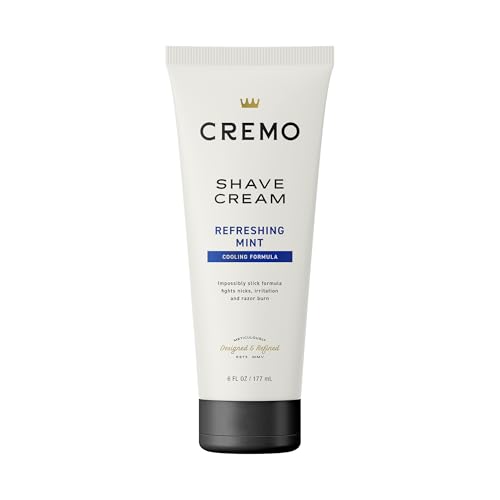
For where the rest of the Cremo range sits, including which items are the mild ones, see the Cremo products worth buying for sensitive skin.
If you would rather compare across brands before deciding, the post-shave balm shortlist covers the options by skin type and finish.
Verdict
The Cremo Cooling Post Shave Balm does exactly one thing and does it well: it makes a freshly shaved face feel cold, and it moisturises while it does it. Buy it if that sensation is what you want and your skin tolerates menthol and a mint scent. Skip it if your skin is reactive, if you are treating razor burn rather than finishing a shave, or if you want an unscented product.
In the US the decision is mostly made for you, because Cremo no longer sells it direct. The Blackstone balm is the closest substitute and the Jack Black gel is the lighter one, and both answer the same question the Cremo answered: how do you want the end of a shave to feel?


Leave a Reply