Three jars, one shelf, the same promise on all three labels: a softer beard. They are not three strengths of one product. They are three different jobs, and which one you need depends less on the jar than on what your beard is doing and what the skin underneath it is doing.
The short answer. Beard oil is the lightest layer, and the one dermatologists suggest first if your skin is normal or dry. Beard balm adds wax, so it conditions and gives a light grip to a beard that will not sit flat. Beard butter is a butter-and-oil blend with little or no wax: heavier conditioning than oil, and almost none of the control of a balm. And if your beard is short and your skin is calm, you probably need none of them.
That last sentence is the part most product pages leave out, so it is worth starting there. If you already know you want a balm and only need the shortlist rather than the reasoning, the balm comparison is the faster read.
Start with your skin, not the jar
The American Academy of Dermatology’s beard guidance is about the face under the hair. The daily plan its dermatologist recommends is wash, moisturize, groom, and the moisturizer changes with your skin type: a beard conditioner for skin that is oily or acne-prone, beard oil for normal or dry skin, and a gentle fragrance-free moisturizer if your skin reacts easily. Balm and butter do not appear in that list as categories at all. Moisturizing is also what softens the skin and the hairs themselves, which is why the itch of a new beard responds to it and to nothing more elaborate.
Two dermatology points decide more than the wax content does. The first is acne. Yale Medicine’s dermatologists note that beard oils can promote acne in people who are already prone to it, and suggest skipping them if you break out easily. A butter or a balm is not automatically safer; it is the same kind of fat on the same skin. The second is flaking. Beard dandruff is usually seborrheic dermatitis, an immune reaction to a yeast that lives on skin, and it is not a hygiene problem. The usual first step is a medicated shampoo, commonly one with 1 percent ketoconazole, not a more expensive jar.
If either of those is your situation, the format comparison is answering the wrong question, and a leave-in product is an expensive way to find that out.
What is actually in the three jars
The difference is not mysterious. It is one ingredient.
| Format | What is in it, and what it does to the beard |
|---|---|
| Oil | Carrier oils such as jojoba, argan or sweet almond, sometimes with essential oils. Coats hair and skin, softens how the beard feels, adds shine. No hold. |
| Balm | Butters, a carrier oil and a wax — usually beeswax, sometimes candelilla. Conditions and gives light grip; needs warming between your palms first. |
| Butter | Solid butters such as shea, mango or cocoa, plus carrier oils, with little or no wax. The heaviest conditioning of the three; melts on contact, minimal hold. |
The wax is the whole difference between a balm and a butter. More wax makes a firmer product with more grip, and it also makes a thin beard look tacky, which is why a wax-heavy balm on a patchy beard feels like a mistake. A product with little or no wax spreads like a thick lotion and lets the hair fall where it wants.
What follows from that is the thing to remember while shopping: the word on the jar describes a texture, not a specification. Products sold as butter sometimes list beeswax, and some balms are butter-heavy enough to feel like one. The ingredient list settles it in five seconds. If it names beeswax, candelilla or carnauba, you are holding a balm, whatever the front of the tin says.
Beard oil: the lightest layer
Oil is a blend of carrier oils that coats the hair and the skin under it. It adds shine and slip, it makes a coarse beard feel softer, and it does nothing about direction: a beard that parts down the middle will still part down the middle.
It suits you if your skin is normal to dry, your beard is short to medium, and you dislike the feel of product sitting in the hair. It is the wrong first buy if you break out under your beard. If your skin reacts easily, look for a fragrance-free version; dermatologists point at fragrance as one of the things that makes reactive skin more reactive.
Quantity matters more than technique with an oil. Start with less than you think you need, because the greasy look people complain about is almost always too much rather than the wrong product, and you can add more.

This is Honest Amish’s fragrance-free oil: a 2 oz blend of organic carrier oils with no added scent, which is the version to start with if scent is the part your skin objects to. Its limit is every oil’s limit. It conditions and adds shine, and it will not hold a shape.
If you want the oils compared on their own terms, carrier oils and all, the beard oil guide covers that ground.
Beard balm: conditioning with a little grip
A balm is the same idea with wax added, and the wax is what lets it do a second job. It conditions the hair and leaves enough grip to push a flyaway section back into line and keep a longer beard roughly where you combed it. It is not a styling product in the pomade sense: it will not sculpt a curl or hold a handlebar moustache, and a balm that claims to is mostly wax.
It suits medium to long beards, coarse or wiry hair, and anyone whose beard has started growing in different directions. It is the wrong choice for a thin or patchy beard, where a wax-heavy balm reads as greasy rather than neat. And it will not fix split ends: a split cannot be rejoined with product, only cut off.
Balm needs a few seconds of friction between your palms before it will spread evenly. Applied cold, it sits in clumps.
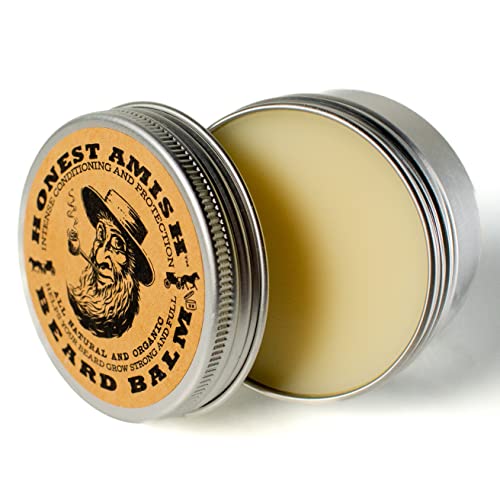
Honest Amish’s balm is sold as a natural leave-in conditioner, and its listing describes a shea butter, coconut oil and argan oil blend that softens and conditions. Note what that listing does not promise: hold. It is the conditioning-first choice here, and if grip is the reason you are buying a balm, the balm comparison is the better starting point. For how much to use and the order of steps, the balm application guide is the page for that; this one is about which format to buy.
Beard butter: the middle jar, and why the label matters
Butter is where the naming gets unreliable. On paper it is the middle option: solid butters whipped with carrier oils, no wax or very little, which gives you the heaviest conditioning of the three with none of the grip. It melts on contact, spreads like a thick lotion, and leaves hair soft and falling naturally.
In practice, butter is a texture word that any brand can print. Some products sold as beard butter list beeswax in the ingredients, which makes them balms in a wider jar. Others are a balm sold to a different search term. That is why this comparison is harder to shop than it looks: the format is real, the label is not standardized.
It suits you if your beard is coarse, dry or mid-length, your skin tolerates a heavier product, and you do not need the beard to hold a shape. It is the wrong buy if your beard is short, if your skin is oily or acne-prone, or if what you actually want is control. In that last case you want a balm.
So the useful advice here is a test rather than a single pick, because these products vary more between brands than the labels suggest. Read the ingredient list: if the first entries are shea, mango or cocoa butter and a carrier oil, with no wax anywhere, that is a butter. If beeswax or candelilla appears, it is a balm and belongs in the balm comparison instead.
One more thing to ignore on those listings. Butters in particular are sold with a growth or thickening claim in the title, and that claim is not something a topical product can deliver. There is more on that below.
If your skin is oily or acne-prone
This is the case the shelf handles worst. Oil is the product most often recommended to everyone, and it is the one dermatologists warn about for acne-prone skin. The AAD alternative for oily or acne-prone skin is a beard conditioner rather than an oil, and a conditioner has one practical advantage: it can be rinsed out, so you get the softening without leaving a film on your skin.

Bevel’s conditioner is built on coconut oil and shea butter and is meant to be used either as a rinse-out or left in. Used as a rinse-out, it softens the beard and then goes down the drain. Left in, it behaves like a light leave-in conditioner. Use it after washing. If you are prone to breakouts, wash gently twice a day and keep your hands off your face; both are the dermatology advice for beard acne. The conditioner guide covers the rest of that product class.
The trade-off is where the product works. A conditioner acts on the hair, and a rinse-out takes most of it down the drain, so it does less for the skin underneath than an oil you leave on. That is the point if your skin breaks out under a leave-on film, and the reason to skip it if your problem is dryness rather than oiliness: a dry beard is better served by an oil or a wax-free butter, which stay where you put them.
The thirty-second decision
- Short beard, calm skin, no flaking: buy nothing yet. Wash it, keep it trimmed, and revisit if it starts to itch.
- Itchy or flaky skin under the beard: treat the skin first. Greasy yellow flakes are likely seborrheic dermatitis and need a medicated shampoo, not a butter.
- Dry or coarse beard, mid-length, no styling problem: oil, or a wax-free butter if oil feels too light.
- Beard that will not sit flat, or needs shaping: balm, chosen by wax content.
- Oily or acne-prone skin: conditioner, rinsed out, rather than oil.
What none of these will do
They will not make a beard grow. How much facial hair you can grow is largely inherited; Yale’s dermatologists put thick growth down to family, and a product sitting on the surface of a hair does not change what the follicle does. That is why growth butter and thickening balm are marketing rather than a mechanism, and why a butter with biotin in its name is not a shortcut.
They will not repair a split end. A split is a crack in the hair shaft. A coating can make the hair feel smoother and stop it catching on things, but the crack stays until it is cut off.
And they are not a substitute for washing. A beard that traps sweat and dead skin stays irritated under any product.
Before you buy
- Patch test along the jawline for a few days before committing a whole beard to something new, especially anything scented.
- Buy one jar, not three. The formats overlap enough that a second product is usually a solution to a problem you do not have yet. A second one earns its place only on a long beard that needs both conditioning and shaping, and then it is one light product for the skin and one balm for the shape.
- Store it somewhere cool; butters and balms soften quickly in a warm bathroom.
- A beard comb does more for even distribution than another scoop of product.
If you take one thing from this page, take the order of the decision: choose the format by the job, then read the ingredient list to check you got the format you paid for. The jar with the best copy is not necessarily the jar with the wax content you wanted.


Leave a Reply