If you shave with an electric razor, the short answer is yes: use an aftershave afterwards. The one most people picture, though, is the wrong product for the job.
The astringent splash that stings after a blade shave exists because a blade leaves skin that needs settling down. An electric shaver works differently. It cuts hair between a moving cutter and a foil or rotary head, with the skin kept behind a barrier the whole time, so what you treat afterwards is intact skin that has just spent a couple of minutes in contact with a moving head.
That difference decides the bottle. Below is what an electric shave actually does, why an alcohol splash does less for it than the label suggests, and what to use instead. If your current routine leaves your skin calm, keep it. Nothing here needs replacing.
What an electric shaver actually does to your skin
The difference between an electric shaver and a blade is mechanical, and it decides everything that follows.
With a foil or rotary shaver, hair is fed through perforations in the head and cut between two surfaces. Gillette describes the action as being like a pair of scissors, with the cutters moving beneath the surface and the skin protected from direct blade contact. Hair is trimmed slightly above skin level, which is why an electric shave can feel less smooth straight afterwards than a blade shave.
A blade does the opposite. It runs across the skin and takes something with it. Cleveland Clinic’s explanation of razor burn is specific about the cost: tiny cracks in the top layer of skin, a loss of hydration and inflammation can all happen when a blade moves across your face.
So the two methods do not leave you with two versions of the same aftermath. After a blade, you have a surface that has been physically scraped, and a barrier that is no longer quite intact. After an electric shave, the cutter has not touched the skin directly: the hair is a fraction longer, and there is no blade damage to settle.
Why the classic sting matters less here
Traditional aftershave is built around alcohol, usually with water, fragrance and sometimes menthol. On a blade-shaved face that combination had something to answer: alcohol is an astringent, and the sting lands exactly where the blade has left the skin compromised.
Dermatology guidance points the other way once skin is dry or irritated. Cleveland Clinic recommends an emollient, meaning an aftershave or a moisturizing lotion, and specifically advises avoiding products that contain alcohol or fragrance. That advice is about aftercare, not scent, and it holds whether the skin was cut by a blade or simply dried out.
Our reading of that is straightforward: where the skin has not been broken, an astringent has very little to do. What is left is the drying, which is the part you notice later in the afternoon. A sting is not a signal that something useful happened.
What to put on instead
Three formats cover almost everyone. The choice is about your skin rather than your shaver.
- A balm is the thickest. It behaves most like the emollient the clinical advice points at, so it suits skin that feels tight afterwards, dry winter air, or a face that has already been shaved twice today.
- A gel is lighter and disappears faster. It suits oilier skin, and people who moved to an electric shaver partly to escape the mess of lather often prefer it because it never feels like a cream sitting on the face.
- A plain moisturizer you already own is fine. If it is fragrance-free and does not sting, nothing on the label has to say aftershave. Cleveland Clinic names a moisturizing lotion as an acceptable emollient.
Whichever you choose, two habits seem to matter more than the formula: apply it to dry skin a minute or so after shaving, and use less than you think. A balm you have to wipe off was applied too generously.
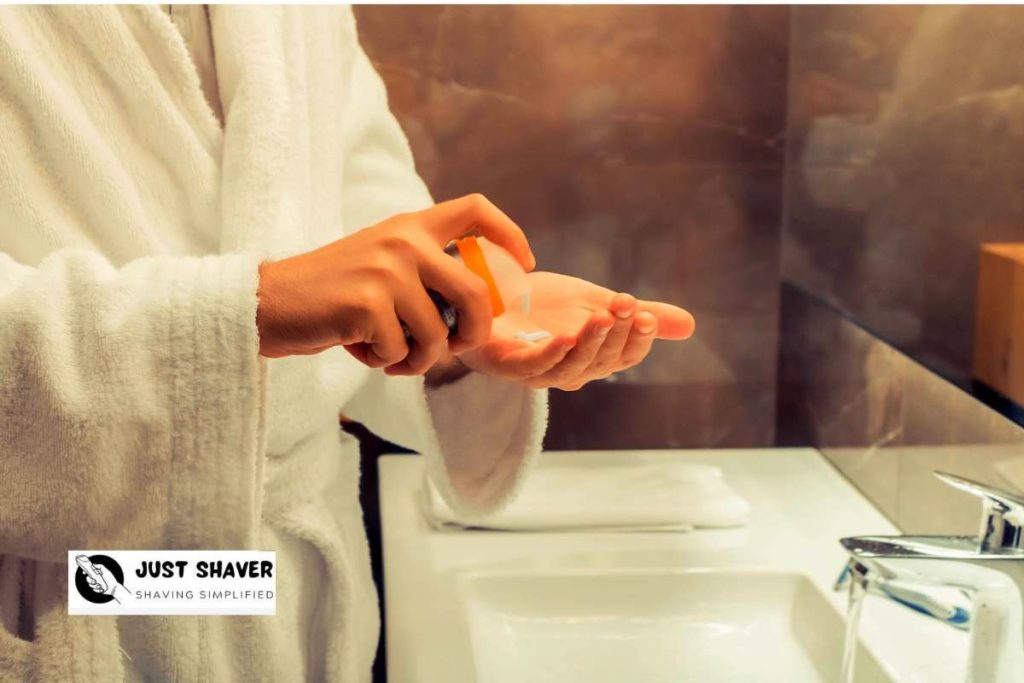
If you would rather have two concrete options than a shelf to browse, here is a good example of each.
A balm with no alcohol in it: NIVEA MEN Sensitive Post Shave Balm
Choose this if the sting is the part you want gone. It is labelled alcohol-free, so there is nothing in it designed to bite, and the listing describes it as soothing shave irritation and fast absorbing. That combination is what an electric shave usually needs: moisture that goes in rather than a film that sits on top.
It comes as a three-pack of 3.3 fl oz bottles, which suits a daily habit. The trade-off is the format: a balm sits heavier on the skin than a gel, and three bottles is a commitment if you have not tried it before.

A gel instead of a cream: Jack Black Post Shave Cooling Gel
Choose this if a cream feels like too much. It is a clear gel rather than a lotion, so it goes on thinner than a balm. Pick it if cream feels heavy, or if you shave in the morning and leave straight after.
The listing describes it as soothing razor burn and irritation, and states that it is fragrance free, in a 3.3 fl oz bottle. One caution: cooling is a sensation, not a treatment. If your skin is already angry, a cooling product can feel like it is helping while the irritation underneath is unchanged. Settle the irritation first and then decide.

Read together, the two labels cover the two things the clinical advice flags: the balm is alcohol free, and the gel’s listing states fragrance free. Neither states both, so if your skin reacts to everything, check the full ingredient list before you buy.
For a wider field, our post-shave balm picks cover seven options, and the aftershave lotion guide covers the splashes this page is cautious about.
If you still want a splash
A splash is not a mistake. If your skin is oily, or you simply like the ritual and the scent, an alcohol-based aftershave can work. It is just worth knowing what it is and is not doing.
Two things make it likelier to go badly. Applying it to skin that is already pink, tight or stinging adds a drying astringent to skin asking for the opposite; Cleveland Clinic’s advice to avoid alcohol on dry or irritated post-shave skin is the relevant guide there. Using it instead of a moisturizer also leaves water loss unaddressed.
If the ritual itself is what you like, our explainer on what aftershave is for covers what each type is actually doing.
When the aftershave is not the problem
If your face is red, tight or irritated after an electric shave, the likeliest causes sit in the shaver rather than the bathroom cabinet.
A head packed with clippings and skin oil does not cut cleanly, and a worn foil or cutter drags instead of slicing. Gillette’s own guidance is that electric shavers need regular cleaning, lubrication and timely replacement of foils or cutters to keep performing. Start with cleaning the head properly, and if the foil is past its life, change it.
If your skin reacts to everything, though, the shaver may be the mismatch rather than the aftercare. Whether an electric shaver suits sensitive skin is a separate question from what you put on afterwards, and it is worth settling first.
If it still does not settle, treat what you have as razor burn and irritation, and stop shaving the area while it heals. That last part is Cleveland Clinic’s advice.
The two minutes before matter more than the bottle after
Electric shaving is dry shaving: no water, no lather, no cushion. That is the trade you make for speed, and it is why the shave itself can feel like it is tugging.
If tugging is your complaint, aftercare is the wrong place to fix it. Clean, dry skin, a charged device and a head that is genuinely clean do most of the work. Past that, pre-electric lotions and gels are formulated for dry shaving rather than for lather, and they change the shave itself instead of the finish.
The short version
- Use something after an electric shave. Your skin is intact, but it is dry.
- Skip the alcohol splash unless you know your skin tolerates it. It was designed for a blade’s aftermath.
- Balm for skin that feels tight, gel for oilier skin or if you dislike cream, a fragrance-free moisturizer if you already own one.
- Redness that persists is a head or technique problem. Clean it, check the foil, and stop shaving the area while it settles.
And if the shaver itself is the part you are still deciding, start with our electric razor picks rather than the aftercare shelf.



Leave a Reply