Clippers are the tool for taking length off: your own hair, a beard you keep short, or a head you buzz before you shave it. This guide is for anyone who cuts their hair (or their family’s) at home, runs their own fades, or keeps a beard and hairline sharp, and who wants one machine that fits that job rather than the biggest kit on the shelf. Eight current clippers are below, with what changes between a budget kit and a barber-brand machine and the trade-off you accept on each one. If you only edge a beard and never cut hair, you want a trimmer rather than a clipper. Our guide to beard trimmers is the better start. And if the goal is skin-smooth, a clipper is the first pass, not the finish: see how to achieve a smooth shave on your head.
Clippers, trimmers and shavers: which one you need
The three tools overlap in the shop and not in use.
- Clippers cut bulk hair. They have a wide blade, take guide combs, and are built to run across a whole head without clogging. This is the haircut tool.
- Trimmers and outliners have a narrower blade (often a T-blade) for edges, hairlines and short beards. They are for precision, not for cutting a full head of hair.
- Shavers cut hair at skin level. If you want a clean face or head, that is a shaver’s job, and the clipper is only the prep step.
If you are unsure where your own tool sits, our explainer on the difference between clippers and trimmers settles it.
How to choose barber clippers
Motor: what the box is telling you
You will meet three motor types. A magnetic motor is the cheapest and quietest, and its power falls off as the blade meets thick hair. A pivot motor sits between the two, with more torque than a magnetic one. A rotary motor is the most powerful and usually the most expensive. More power matters most when you are cutting thick, damp or matted hair; for regular trims on normal hair, a cheaper motor is not the limiting factor. Ignore the raw speed figure on its own. A clipper rated at a high strokes-per-minute count still cuts badly if the blade is blunt or misaligned.
Corded or cordless
Corded clippers never run out mid-cut and usually give more consistent power, which is why professional machines are often cord-only. Cordless clippers free you from the cable and are easier for awkward angles and for cutting someone else’s hair, but you are trading peak power and battery age for that freedom. If you cut hair once every few weeks, battery life is rarely the problem; if you cut several heads in a sitting, corded is the safer choice.
Blades and guards
There are two ways to set the length. Guide combs clip onto the blade and give you fixed lengths; they are the beginner-friendly option and come in the kits. An adjustable blade moves the cutting edge itself, usually from a fine setting up to around a #1, and lets you blend a fade by lever rather than by swapping plastic. A detachable blade system is what a working barber uses, because the whole blade can be changed or sharpened; it costs more and adds parts to look after.
What to check before you buy
- The job first: a haircut clipper, an edging trimmer and a shaver solve different problems. Buy for the cut you actually do.
- Metal or plastic: a metal body survives drops and heat better; plastic kits are lighter and cheaper but flex.
- Spares and blades: established brands (Wahl, Andis, Oster) sell replacement blades, and their clippers can be maintained for years rather than replaced.
- The kit contents: a bundle with guides, oil and a brush is genuinely useful, but you are paying for it; a bare clipper plus the two guides you use is often the better buy.
- What you give up: cordless freedom costs power and battery life; a pro-grade machine costs money and often comes with no accessories at all.
The 8 best barber clippers
Eight current options, from a budget home kit to a professional corded machine, each with the reader it suits and what it asks you to give up. Live prices and availability are on the cards.
Wahl Deluxe Chrome Pro Complete Kit — best overall home kit
This is the pick to make if you want one box that covers home haircuts and beard upkeep. It pairs a corded Chrome Pro clipper for the cut with a small cordless battery trimmer for edges and a pair of styling shears, so you can do the main pass and the finishing without a second purchase. Who it suits: a household doing its own haircuts who wants the accessories included and does not want to think about batteries for the main clipper. What you give up: the clipper itself is corded, so you lose freedom of movement for consistent power, and the trimmer in the box is a light battery unit rather than a serious outliner. The comb set is plastic, which is normal at this price but will not outlast a metal-guard pro set-up.

Wahl Color Pro Corded Haircutting Kit — best budget kit
The cheapest sensible route into cutting hair at home. The kit’s guide combs are colour-coded to their lengths, which sounds like a gimmick and is not: it makes it far easier to grab the right guard once and keep both sides even. The clipper is corded and has an adjustable taper lever for blending. Who it suits: a first-time home cutter, or a family cutting several heads of ordinary hair on a budget. What you give up: it is a beginner machine. Its comb range is aimed at basic lengths rather than skin fades, and the plastic body will not take the knocks a barber-grade clipper shrugs off. If you plan to cut fades regularly, spend more now.

Andis Master Adjustable Blade Hair Clipper — best professional corded clipper
This is the most serious corded tool in this list. Its carbon-steel blade adjusts across roughly the 000 to 1 range without plastic guards, so length changes come from the blade itself, and Andis rates the machine at up to 14,000 strokes per minute. It is heavier and metal-bodied, which is a feature when it is running all day. Who it suits: someone who wants a long-lived professional machine, is willing to learn lever and blade adjustment, and mainly cuts hair at a fixed station (the kitchen, the garage) where a cord is not a nuisance. What you give up: there are no guide combs in the box, so the first cuts ask you to understand blade settings rather than click on plastic; it is corded; and it is the bare tool, not a kit. Cost is real if you only cut occasionally.

Oster Fast Feed Adjustable Pivot Motor Clipper — best for thick or coarse hair
Oster’s professional pivot-motor clipper, and the model Oster rates for more power than a magnetic-motor machine: the maker describes this pivot motor as more powerful than a magnetic one and markets it as whisper-quiet. It takes an adjustable 000 to 1 blade of the classic type, so you set length at the blade rather than with combs. Who it suits: anyone cutting dense or heavy hair, or who wants more power than a budget kit is built to give. What you give up: the same as its class: it is corded, it is a bare professional tool rather than a family kit, and the pivot motor makes it heavier than the light plastic machines. For fine, ordinary hair it is more machine than the job needs.

Wahl 5 Star Magic Clip Cord/Cordless Clipper — best professional cordless
If you want barber-grade fades without a cable, this is the one. The Magic Clip name is about the stagger-tooth blade, which is designed to leave a line for the next pass and blended gradients rather than harsh steps; the clipper runs corded or cordless, and the listing rates its lithium-ion battery at over 100 minutes with eight cutting guides included. Who it suits: a capable home cutter doing their own fades, and anyone who cuts other people’s hair and needs to move around the head. What you give up: price, and the blade is a blending blade: it is not built to mow down long hair in one pass, so plan to take length off first. Battery capacity is the trade for the freedom; a corded machine never quits mid-cut.

Andis T-Outliner Beard & Hair Trimmer — best for line-ups and edging
This is an edger, and it is here because edges are where most home cuts are won or lost. The T-Outliner is a corded trimmer with a carbon-steel T-blade and a shallow-tooth geometry that the maker describes as reducing nicks while it cuts a line. It is the tool for hairlines, necklines, beard borders and the detail a haircut clipper cannot reach. Who it suits: anyone keeping a shape in their beard or hairline, and home cutters who want the finish to look deliberate. What you give up: it does not cut a whole head of hair; the blade is too narrow and it is built for detail. If you only buy one machine and cut hair, this is not it; it is the second tool that makes the first one look good.

FADEKING Professional Hair Clippers Cordless Kit — best value cordless kit
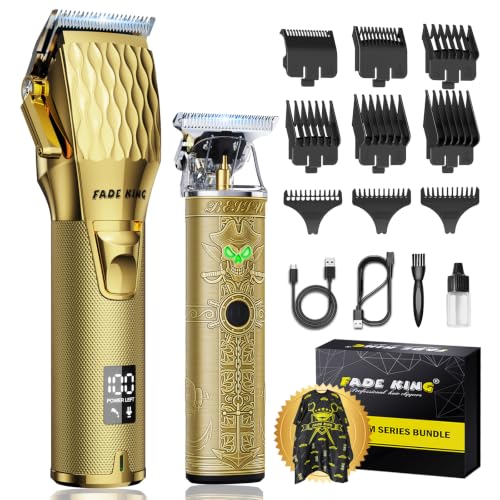
A cordless clipper-and-trimmer kit priced like a budget set and specified like a mid-range one: a fade-oriented blade with a ceramic moving cutter, a separate T-blade trimmer for edges, and a motor the listing rates at 7,000 RPM. It is the pragmatic way to get cordless freedom plus an edging tool without paying barber-brand money. Who it suits: a home cutter doing fades or regular trims who wants both machines and cordless convenience at once. What you give up: it is a lesser-known brand, so long-term spare blades and service are less certain than with Wahl, Andis or Oster; the kit includes more accessories than you may use; and at this end of the market the metal build and the motor are the parts that feel cheaper over years of use.
KIKIDO Cordless Hair Clippers kit — best budget cordless
The lowest-cost way to go cordless. It is a rechargeable clipper-and-trimmer set with an LED battery display and a motor the listing rates at 6,500 RPM, which is enough for occasional trims on ordinary hair. Who it suits: someone who cuts hair rarely, wants no cable, and does not want to spend much to find out whether home cutting is for them. What you give up: the build is light and plastic, there is no established parts or service history behind the brand, and the fine blend quality a barber machine delivers is not what this is for. Treat it as a starter set rather than a tool you keep for a decade.

How to look after clippers
A clipper cuts badly long before it stops working, and almost always for two reasons: hair and oil. Brush the head out after every use, keep the blade oiled as the maker directs, and check that the blade is aligned rather than simply screwed down tight. There is a proper way to set the blade against the cutting surface, and doing it once saves a lot of blunt-feeling cuts. Our guide to adjusting and zero-gapping your clippers walks through it. If the machine is losing power or pulling rather than cutting, the cause is usually a full blade, a dry blade or a tired battery, in that order.
When clippers are not the answer
Two common mismatches are worth naming before you spend. If you want a close, skin-level result on your face or head, a clipper will only get you part of the way. You need a shaver after the clipper, and our pick of electric razors for men is the right list for that job. And if you are shopping for your beard rather than your hair, a full clipper is the wrong shape: a trimmer does the job with more control, which is what the electric barber razors and beard-trimmer roundups on this site are for. Buy the tool for the job you do most, and add the second machine later only if the gap is real.
The bottom line
For most households, the Wahl Deluxe Chrome Pro kit covers a home haircut and beard tidy-up in one box, and the Wahl Color Pro is the right entry point if budget decides. If you cut fades or take your clippers seriously, the Andis Master is the corded professional reference point, the Oster Fast Feed is the pick for thick hair, and the Wahl Magic Clip is the cordless one worth stretching to. Add the Andis T-Outliner when you care about edges, and take the FADEKING or KIKIDO kits if you would rather spend less and accept lighter build. Whatever you choose, brush and oil it, set the blade properly, and cut for the job in front of you rather than the one the box promises.


Leave a Reply