Shaving cream is the layer between the blade and your skin, and the right one depends less on the brand than on your skin, your razor and how you like to lather. This guide is for anyone buying shaving cream, gel or foam who wants to know what the label is really telling them, and it names seven options worth considering — each with the reader it suits and the drawback to accept. If you already have a cream that works, you do not need this page. If your skin reacts easily, the format and the fragrance matter more than the price.
What a shaving cream actually does
Cream, gel and foam all do the same basic job: they lubricate the skin so the blade glides, and they hold a little cushion so the edge does not scrape. What changes between them is texture, how they lather, and what is added for comfort. None of them makes a dull blade sharp or a hurried technique safe. If the razor pulls, the blade or the angle is the problem, not the cream.
Cream, gel, foam or soap: choose the format first
A can of gel or foam is the quickest option: press the nozzle and it is ready, with no brush and no bowl. A tube cream can be used by hand or whipped with a brush, and a brush-built lather is generally thicker and warmer. A shaving soap is the cheapest per shave but needs the most practise. For most people the format is a routine choice, not a performance one: pick the one you will actually use in the morning. If you are weighing the two gels, how to find the best shaving gel for men goes into that comparison, and shaving cream vs shaving soap covers the soap end of the shelf.
Know what “sensitive skin” on the label means
The words on the front are marketing. “For sensitive skin” usually signals that the maker trimmed back fragrance or added soothing ingredients such as aloe, chamomile or witch hazel. It is not a test result, and it is not a promise that the product cannot sting. Read the ingredient list rather than the badge. If your skin reacts easily, a fragrance-free formula and a fresh blade are usually the bigger levers; the cream sits on top of those, not instead of them.
Shaving creams and gels worth considering
These cover the main formats and skin types, with the reason each suits a particular reader and the compromise that comes with it. Each one is described by what it is made for, not by how it looks on the shelf.
Two other formats are worth knowing. A pressurised foam such as Barbasol spreads fast and costs the least, but gives less cushion than a gel; a brushless cream such as Cremo goes on thin and translucent so you can see where the blade is going. A women’s gel labelled for sensitive skin (Gillette Venus Satin Care, Skintimate) or a men’s gel for dry or reactive skin (NIVEA MEN Sensitive) is mostly a matter of fragrance and additives: read the ingredient list rather than the front of the can, and match the format to how you shave.
Edge Shave Gel for Men, Sensitive Skin. A cooling gel with aloe, sold in multipacks. It suits someone who wants a fresh, slightly tingly shave and does not mind a scented formula. If this is the one you are leaning towards, what to look for in a shave gel for sensitive skin takes the decision further.

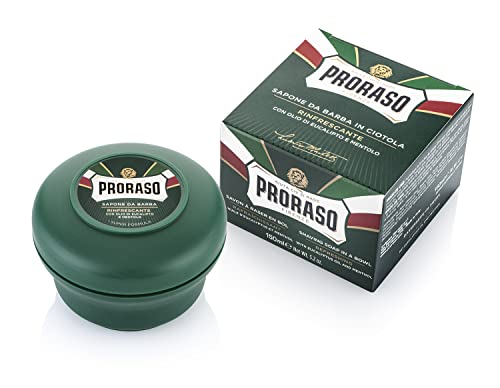
Proraso Eucalyptus Oil & Menthol. The traditional option: a soft shaving soap meant to be lathered with a shaving brush, so it rewards a brush and a little time rather than a fast can. It suits a wet shaver who enjoys building the lather. If you want a can and a two-minute shave, this is the wrong end of the list.
If you would rather not use shaving cream at all
Cream is not the only thing that lubricates. Oils, hair conditioner, soap-based lather and even plain warm water work for some people, though each gives up some of the cushion a purpose-made cream provides. The best substitutes for shaving cream compares the realistic alternatives and where each falls short.
After the shave
Once the blade is down, how you finish matters as much as the cream you started with. Rinsing with cool water and then moisturising helps calm skin that has just been shaved, and a post-shave product is optional rather than mandatory. What aftershave is actually for explains where it fits, and where it does not.
Before you buy
- Choose the format first. A can for speed, a tube cream for a brush, a soap if you enjoy the lather.
- Match the formula to your skin. Fragrance-free and a soothing additive for skin that reacts; a moisturising gel for dry skin.
- Read past the badge. “Sensitive skin” on the front is a label, not a test result.
- Judge the formula, not the packaging. Look at the ingredients and the format you will actually use, not at the wording on the front.
- Fix the blade before you blame the cream. A dull or damaged blade causes more trouble than the lather ever will.
- Start with one can or tube. Cream formats are personal; buy a small size before committing to a multipack.
Shaving cream is a small decision with a simple logic: pick the format you will use, match the formula to your skin, and keep a fresh blade in the razor. Get those three right and the difference between the cans on the shelf stops mattering much.


Leave a Reply