If you have an electric shaver in one hand and a can of shaving gel in the other, the useful answer is not yes or no. It is: check what your shaver is rated for. A wet/dry model can be used with gel or foam, and the maker will tell you so in writing. A dry-only model cannot, and lathering it up is how people end up with a head that drags and clogs. If you also use a cleaning station, there is a second catch, and that one comes from the manufacturers rather than from opinion.
The short answer
- Wet/dry shaver: yes. Gel or foam is a sanctioned way to use it. Keep the layer thin, not thick.
- Dry-only shaver: no. The gel will not eat the metal, but water and soap go where the head is not sealed, and the residue stays there because you cannot rinse a dry-only shaver out.
- Either way: foil or rotary does not decide this. The rating does.
Foil or rotary is the wrong question
You will still find the claim that foil shavers are dry and rotary shavers can take gel. That is not how the products are made. Wet use is a rating, not a head design, and the rating changes model by model within both designs. Panasonic’s ARC5 ES-LV97 is a foil shaver, and Panasonic sells it as a WET/DRY model you can use in the shower. Braun’s Series 3 ProSkin is also a foil shaver, and Braun builds Wet&Dry versions of it specifically for shower and foam use. Philips sells its Norelco rotary shavers as wet or dry, down to the inexpensive 2400.
What decides it is on the shaver and in the manual: a tap or bathtub symbol on the body, the model’s IPX rating, or the instruction book. Philips’ own support answer tells you to do exactly that check before the shaver gets wet. If you want the design question that actually matters, that is foil versus rotary, and it is about how the head meets your hair, not about water.
What the makers actually say
The three biggest names all permit a lathering product on the models they rate for wet use, and they are specific about the terms.
Panasonic states it in the ES-LV97 manual: “This WET/DRY shaver can be used for wet shaving using shaving lather or for dry shaving. You can use this watertight shaver in the shower and clean with water.” The same manual tells you to give wet lather shaving at least three weeks, because skin and beard need about a month to adjust to any new shaving method.
Philips answers the product question directly: “You can use any commercially available shaving foam or gel to wet shave with your Philips Wet & Dry electric shaver.” It adds one honest cost, which is that wet shaving is more energy-intensive and may drain the battery faster, and that it does not affect the shaver’s performance. Their product pages say the same thing in shorter form: use it with water, foam or gel.
Braun puts it on the Series 3 ProSkin page: “The Wet&Dry models of the Braun Series 3 are specifically designed to be used also in the shower and with foam or gel.” That model is IPX7 rated. Braun’s shaving guide says the same of the Series 9, which can be used with shaving foam and in the shower.
If your shaver is dry-only
Then the answer is no, and the reason is not that gel is aggressive. A lather is mostly water plus soap, and a dry-only head is not sealed against either. What you get is foam packed into the gap where the cutter meets the foil, a head that drags instead of gliding, and residue you cannot rinse away because rinsing is the one thing that shaver is not rated for. That is a worse shave and a shorter-lived head rather than a ruined finish.
The product that does help a dry shave is a pre-electric lotion: thin, fast-drying, no lather, and designed to be left on the skin under the head. We compared six of them, with the formats explained, in what to use with an electric shaver. That is the right route for a dry-only model. A shaving gel is not.
The catch: your cleaning station
Both makers flag the same collision, and it is the part almost no guide mentions. Braun’s Series 3 page carries a footnote: “Braun recommends not using your Series 3 shaver with foam or gel, if you also use the Clean&Charge Station.” Panasonic’s manual describes the same problem mechanically. If you use the self-cleaning recharger “when the shaver is wet or when soap or shaving gel is on the shaver, cleaning liquid may accumulate in the cleaning tray” — and its troubleshooting table adds that cleaning liquid may leak.
The practical version is simple. On wet-shave days, rinse the head properly, shake it out and let it drain before the shaver goes anywhere near the dock, or clean by hand and skip the dock that day. Our electric razor cleaning guide covers the hand routine for foil and rotary heads.
How to use gel with an electric shaver
Assuming yours is rated for wet use, the technique is the opposite of a blade shave in one respect: less product, not more.
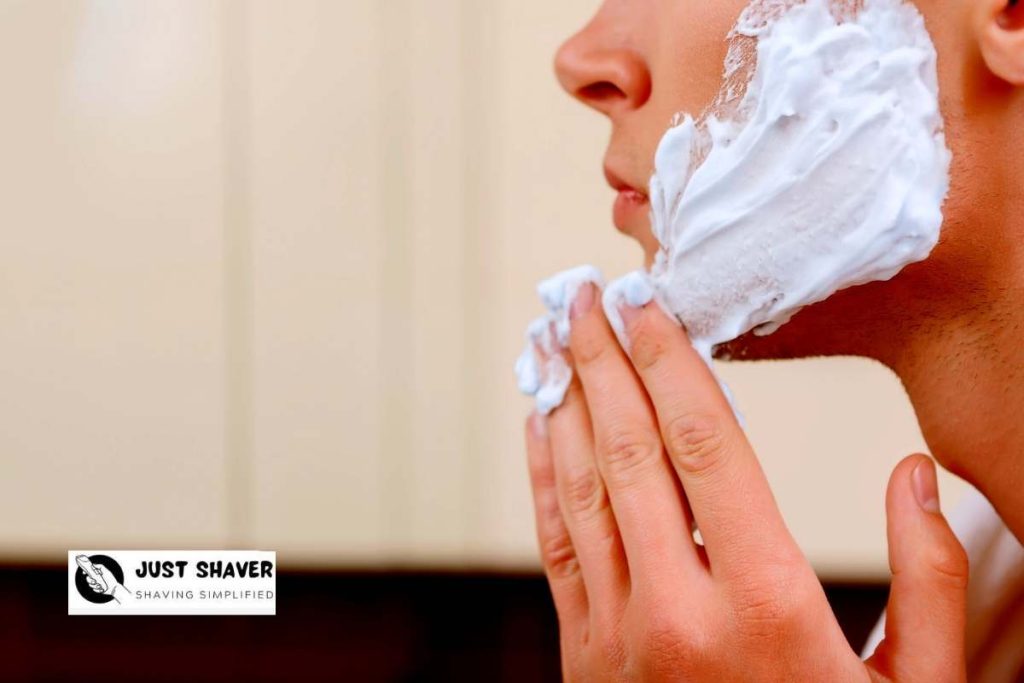
- Thin film, not a barber lather. A thick cushion lifts the foil or the rotary guard off your skin and the head stops cutting. Spread a light layer and let it sit for a few seconds.
- No pressure. Move in small circles and let the head find the angle. Pressing pushes skin into the cutters, and that is where irritation starts. The full routine is in our beginner’s guide to using an electric shaver.
- Rinse and dry the head afterwards. Then oil it as the manual says. Gel left in the cutting gap dries hard.
- Expect odd behaviour from some sensors. Panasonic’s manual notes that the shaving sensor may not respond depending on the type and quantity of shaving gel, and that this is not abnormal.
- Give it three weeks. Panasonic asks for at least three weeks of wet lather shaves before you judge the result.
Does gel give you a closer shave?
No, and none of the makers quoted above claims it does. Philips says plainly that wet shaving “does not impact the shaver’s performance”. Gel changes friction at the skin surface. It does not change the cut happening between the cutter and the foil, which is what decides how short the hair ends up.
If closeness is your actual complaint, gel is the wrong purchase. Check the head first, because a worn cutter block is the usual culprit and the signs are fairly clear. Then check technique: direction, number of passes and pressure. Wet shaving with gel is a comfort choice, and a reasonable one on skin that drags. It is not a closeness upgrade.
If your skin reacts
A new gel is one more variable against your skin, so change one thing at a time and give each change a few shaves. If you are already reacting, start on the shaver side instead: the head design, the pressure you use and how worn the cutters are will usually matter more than the product. Our guide to electric shavers for sensitive skin works through that, and what to put on afterwards is a separate decision from what goes on before.
What to do next
Pick up the shaver and look for the tap or bathtub symbol, then check the model number in the manual. That single check settles the gel question, and it costs nothing. If the shaver is rated for wet use, keep the lather thin, rinse and dry the head afterwards, and keep gel away from a self-cleaning dock. If it is not rated for wet use, leave the gel in the cupboard and use a pre-electric lotion instead. And if what you actually wanted was a closer shave, start with the head, because that is the part that wears out.



Leave a Reply