Beard balm is the finishing step, not the foundation. It puts a light film of butter, oil and wax on the hair so a beard that parts in the middle or sticks out at the sides sits down again.
This is for you if your beard is past stubble, it has started growing in different directions, and you want it neat without a hard styling product. Skip it if your beard is very short, if the problem is dry or itchy skin underneath, or if you want a shaped mustache that stays put all day. Those three cases have better answers, and this page will point you at them.
The short answer
Start with a pea-sized amount, warm it between your palms until it turns from solid to oily, and press it into a beard that is still damp from washing. Work from underneath, push it down to the skin as well as through the hair, then comb it through. Add more only where the beard still misbehaves.
Three things decide whether that works: the amount, the timing, and the comb. The easy mistakes are using too much, applying it to a dry beard, and stopping before the comb. Balm will not fix flaking skin, itching or spots under the beard either. That is a skin question, and it has a different answer.
What you are actually putting on your beard
A balm is carrier oils and butters for softness, set with beeswax for hold. Makers describe it either way: some present it as a light styling product whose main job is hold rather than conditioning, while others sell the same oils-and-wax idea as a conditioner. The formulation tells you which one you are buying. More wax means more hold and more warming; more butter means more conditioning and a softer set.
The spectrum runs from wax-forward to butter-forward. A wax-forward balm is firm in the tin, needs more warming, and holds shape longer. A butter-forward balm spreads further and leaves the hair feeling conditioned rather than set. Neither is better. One is for a beard that will not behave, the other for a beard that feels dry.
What a balm will not do is replace a beard oil for the skin underneath. Oil is thin enough to reach the skin, while a balm mostly stays on the hair. If the goal is comfort rather than shape, read our guide to beard oils and what they actually do instead.
How much balm to use
Amounts below are a starting point, not a rule. Beard density, how firm the balm is and how much hold you want all move the number, so begin small and add.
- Stubble to half an inch: skip it, or scrape a fingernail’s worth for stubborn hairs at the jawline. Oil covers this length better.
- Half an inch to an inch: one pea. Warm it fully or it will sit in patches.
- One to three inches: one pea, then a second only on the areas that still lift, usually the sides and the mustache.
- Longer than three inches: two peas, applied in two passes. Do the front first, then reload for the underside where the hair is densest.
The reason to start small is simple: balm is easy to add and awkward to remove. If you overdo it, a clean dry comb lifts some of the excess out, while a wet comb makes it worse. A firm balm also wants more warming rather than more product, which is the mistake that leaves beards looking wet by mid-morning.
Step by step
- Wash first, and rinse properly. A gentle, fragrance-free cleanser massaged through the beard to the skin, rinsed out well, then patted dry. The American Academy of Dermatology recommends washing the face and facial hair daily rather than relying on a rinse in the shower.
- Leave the beard damp. Apply while the hair and skin are still damp from washing. This is the easiest step to skip, and it is the one that decides whether the balm spreads or clumps.
- Warm it. Scrape a pea into your palm and rub your palms together until the balm goes from opaque and solid to clear and slippery. If it still feels waxy after a good rub, you have taken too much.
- Press, do not smear. Start under the jaw and work upward into the beard, then smooth down with the grain. Push some of it through to the skin rather than parking it on the surface.
- Comb it through. A beard comb, used while the hair is still damp, distributes the balm and detangles at the same time. Fingers push product into the middle of the beard and leave the surface uneven.
Give it a couple of minutes before you judge the result. A balm that looks slightly too heavy straight after combing usually settles as the water evaporates.
Oil first, or balm on its own?
If you use both, oil goes on first and balm goes on last. Oil on a damp beard reaches the skin and softens the hair; balm then sits over the top and holds the shape. Reverse the order and the wax film keeps most of the oil away from the skin, which defeats the point of using it.
Use a smaller amount of each when you layer them. A full application of oil followed by a full application of balm is a common reason a beard feels greasy an hour later.
If you only want one product, choose by the problem you actually have. Dry, tight or itchy skin under the beard points to oil. Flyaways, a beard that parts in the middle, or hair that will not lie flat points to balm. If the hair feels rough and straw-like along its length, a beard conditioner is the better third option.
Four things that make balm feel greasy
- Too much product. The usual cause. Halve what you used last time and see whether the result is actually worse.
- A dry beard. Balm on dry hair sits on the outside, looks dull and does not spread.
- Stopping at the fingers. Without a comb the coating stays uneven, whatever the amount.
- Topping it up through the day. One application after washing is normal. Reapplying to tidy flyaways adds a second film over the first.
When balm is the wrong product
- You want a hard hold or a shaped mustache. That is wax work. A balm will soften the shape you are trying to build.
- The problem is dryness or roughness. Oil, butter or conditioner do that job without a wax film sitting over the hair.
- Your beard is very short. Under half an inch there is little for balm to hold, and oil is easier to distribute.
- The skin under the beard is flaking, itching, spotty or sore. Dermatologists list dandruff, ingrown hairs, acne and itch under beards as skin problems that need skin care, not styling. If it persists, that is a conversation with a board-certified dermatologist rather than a bigger tin.
Three balms that suit different jobs
These three cover the useful range: a beeswax-forward classic, an unscented tin for anyone who does not want fragrance near their face, and a softer jojoba-and-shea set that leans toward conditioning. For the full six-way comparison, including scent notes, see our guide to the best beard balms.
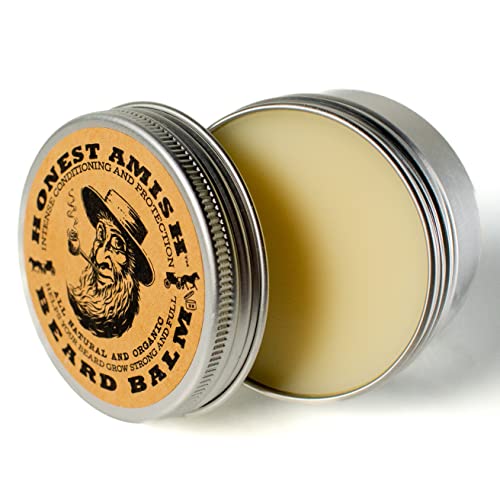
Honest Amish Beard Balm: the classic starting point. A beeswax balm with shea and oils in a 2 oz tin. If you do not yet know how much hold you want, start here: a wax-forward balm can be used sparingly, and learning to warm it properly is the skill the rest of this page depends on.
Striking Viking Unscented: for fragrance-free routines. An unscented 2 oz balm built on argan and jojoba oils, which matters if you work close to people, share a small office, or find fragranced products irritate your skin. It will not fight whatever else you use.

A two-tin set in sandalwood and citrus. Built on jojoba and shea, which are emollients rather than wax, so it leans toward conditioning over hold. That makes it a reasonable match for a longer beard or for hair that feels dry, and two tins let you keep one at home and one in a bag.

The comb does more work than the balm
A fine-tooth comb is what turns a smear of balm into an even coating, and it is the tool you will use every day. Keep one that fits in a pocket so it is there when the beard dries. If you want to choose between materials and tooth spacing, our guide to beard and mustache combs covers that in detail.

How often to use it
Once a day, after washing, is enough for most medium and long beards. Shorter beards usually need it every second or third day, or only when the hair starts to lift. Wash it out properly when you wash the beard rather than layering fresh balm over yesterday’s film, which is how beards end up feeling tacky by the end of the week.
Before you buy
Three things are worth checking before you commit to a tin: how far it leans toward wax or butter (wax means more hold and more warming, butter means more conditioning and faster application), whether it is scented (unscented is the safer first buy if your skin is reactive), and how big the tin is, since a 2 oz tin lasts months at a pea a day.
Buy one, use it for two weeks, and then decide whether you want more hold or more softness. That is a better guide than any description, including this one.


Leave a Reply